Ranking
#39

Ranking
#39
Followers
149.8 M
Digital presence
Official profiles, streaming and discovery.
What a good fan recites by heart (or pretends to).
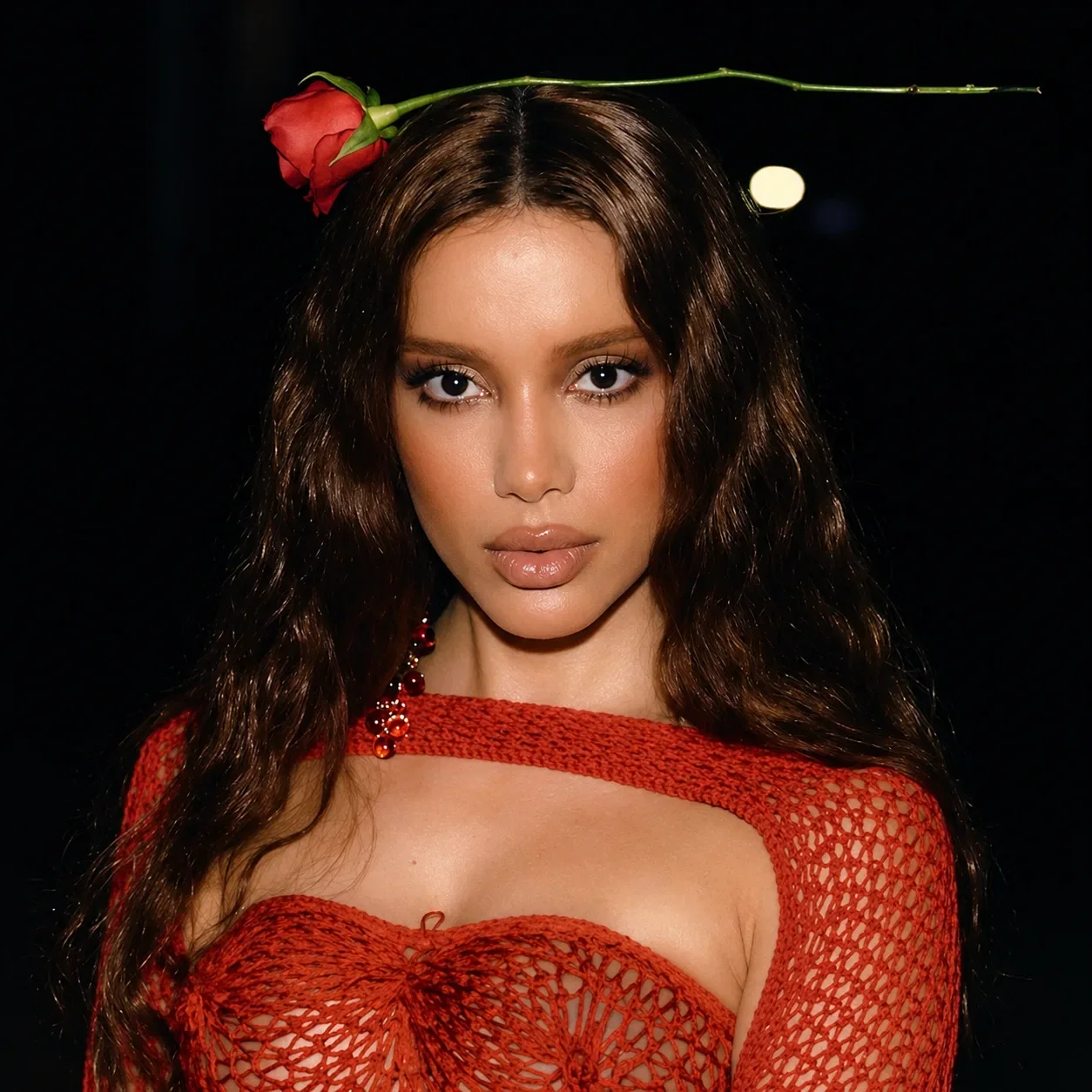
Anitta’s story is not simply that of a Brazilian singer who managed to take her music beyond her home country. From the beginning, her career has reflected an unusually clear understanding of how an artist is built: songs, choreography, visual identity, strategy, languages, collaborations and audience awareness all function as parts of the same project. That vision transformed Larissa de Macedo Machado, a young performer from Rio de Janeiro’s North Zone, into an artist capable of moving from the world of funk carioca parties to some of international pop’s most visible stages without completely abandoning the sound that shaped her earliest professional years. Along the way, Anitta learned to change languages, markets and production styles without erasing where she came from. Her music may move toward reggaeton, electronic pop, R&B or Caribbean rhythms, but Brazilian funk repeatedly returns as a cultural and rhythmic foundation.
Raised in Honório Gurgel, a neighborhood in Rio’s North Zone, she began singing as a child in a Catholic church choir and later studied dance, a discipline that would become inseparable from her performance style. As a teenager, she combined those artistic interests with technical studies in business administration and briefly appeared headed toward a much more conventional professional life. At the same time, she started uploading videos of herself singing online. Those recordings caught the attention of DJ Batutinha, a producer associated with Furacão 2000, one of the most important platforms for Rio’s funk scene. In 2010 she began working professionally within that circuit under the name Anitta, inspired by the central character in the Brazilian miniseries Presença de Anita. Early recordings such as “Eu Vou Ficar” belonged directly to Rio funk culture, but it quickly became clear that she did not intend to remain inside a single scene.
The move toward Brazilian mainstream pop accelerated with “Meiga e Abusada” and exploded with “Show das Poderosas.” The latter turned Anitta into a national figure and established several characteristics that would remain central to her work: memorable choreography, strong visual control, a direct performance persona and an instinctive understanding of how to turn a song into a broader cultural moment. Her self-titled album expanded that early identity through a mixture of pop and funk, while Ritmo Perfeito and Bang developed a more polished visual and musical language. “Bang” was particularly important because it condensed her approach into one highly recognizable package: artwork, video, movement and personality all communicated the same idea. By that stage, she was no longer simply a singer who had emerged from the funk scene; she had become one of the central figures in Brazilian mainstream entertainment while continuing to carry the rhythmic vocabulary of her beginnings.
Her next transformation was far more ambitious. Rather than waiting for international audiences to discover her, Anitta deliberately began constructing a career outside Brazil. She deepened her Spanish, strengthened her English and pursued collaborations designed to connect different music markets. “Sim ou Não,” with Maluma, helped open a stronger relationship with Latin music, while “Paradinha” demonstrated that she could release directly in Spanish without presenting herself as an entirely different artist. That was followed by records and collaborations including “Sua Cara” with Major Lazer and Pabllo Vittar, “Downtown” with J Balvin, “Machika,” “Vai Malandra,” “Medicina” and “Terremoto.” Together, those releases revealed an unusual strategy: rather than leaving Brazil behind in order to enter Latin pop, she worked in both spaces simultaneously, moving between Portuguese and Spanish while building a catalog that could circulate through Brazil, Latin America, the United States and Europe.
Kisses transformed that approach into a multilingual visual album, while Versions of Me placed Anitta fully inside a global pop conversation. Pop, reggaeton, trap, R&B and Brazilian references shared space across songs in Portuguese, Spanish and English. “Girl from Rio” reworked one of Brazil’s most familiar cultural references through a contemporary lens, but “Envolver” was the record that dramatically changed the scale of her international visibility. Sung in Spanish and built around a controlled, sensual reggaeton groove, the song spread organically through digital platforms, with its choreography becoming inseparable from the phenomenon. Its reach mattered beyond ordinary chart success: a Brazilian artist was connecting with a truly global audience without relying on English and without disguising the fact that her career had been built in a market historically positioned outside the center of the international pop business.
After years spent widening her musical vocabulary to reach new audiences, Anitta placed funk carioca much more explicitly at the center of her work with Funk Generation. The move created a sense of return. The genre that had launched her professional career was no longer simply one ingredient inside international pop production; it became the main subject presented to a worldwide audience. “Funk Rave,” “Mil Veces,” “Joga pra Lua” and other tracks explored different sides of Brazilian funk, from its harder rhythmic impact to combinations with reggaeton, electronic music and pop. The project also challenged an overly simple interpretation of her career. Anitta had not abandoned funk in order to become international; she had spent years building enough international space to bring Brazilian funk with her.
Onstage, that idea becomes even clearer. Anitta performs as someone for whom voice, movement and attitude carry almost equal weight. Choreography is not an accessory added after the music has been completed; it is one of the ways the song communicates. Her body language draws from funk carioca while her staging uses the vocabulary of large-scale international pop, allowing a performance to move from highly polished spectacle to something that still recalls the direct energy of a Rio dance floor. She also developed an unusually sharp relationship with cameras and digital platforms, understanding that contemporary performance extends beyond the physical stage into music videos, short-form clips, dance challenges and other visual spaces where songs acquire a second life.
What distinguishes Anitta within Brazilian and Latin pop is therefore not simply the fact that she achieved success in several languages. Her career represents a different model for how an artist from outside the traditional centers of the music business can become international. Rather than disappearing into the English-language market, she built an identity capable of negotiating among several cultures, learning their codes without surrendering her own. Portuguese can sit beside Spanish and English; funk carioca can collide with reggaeton, pop or electronic production; and the artist who emerged through Furacão 2000 can stand on a major global festival stage without treating that origin as an old chapter to be left behind. Her most significant talent may be precisely that ability to turn adaptation into identity. Anitta did not merely cross borders; she made the act of crossing them part of her sound.
Main genre
FUNK
Main subgenres
Like a superfan's list — except verified, with sources and links.

22–Apr 24, 2022
Indio, California · United States
Past15–Apr 17, 2022
Indio, California · United States
Past
Sep 27 – Oct 06, 2019
Rio de Janeiro, Rio de Janeiro · Brazil
PastWhat we managed to link to the concert archive. If a date is missing, tell us — happens to us too.
No linked concerts
Every concert and festival of the year, traced on the globe. Hit play and follow the route stop by stop.
 Billboard LatinNominated
 AMAWonBillboard LatinNominated
Photos from the public archive.
Recent coverage linked to the artist.




Close by genre and social signal.
No related artists
When there is enough genre signal, they will appear here.