Ranking
#12

Ranking
#12
Followers
318.7 M
Digital presence
Official profiles, streaming and discovery.
What a good fan recites by heart (or pretends to).
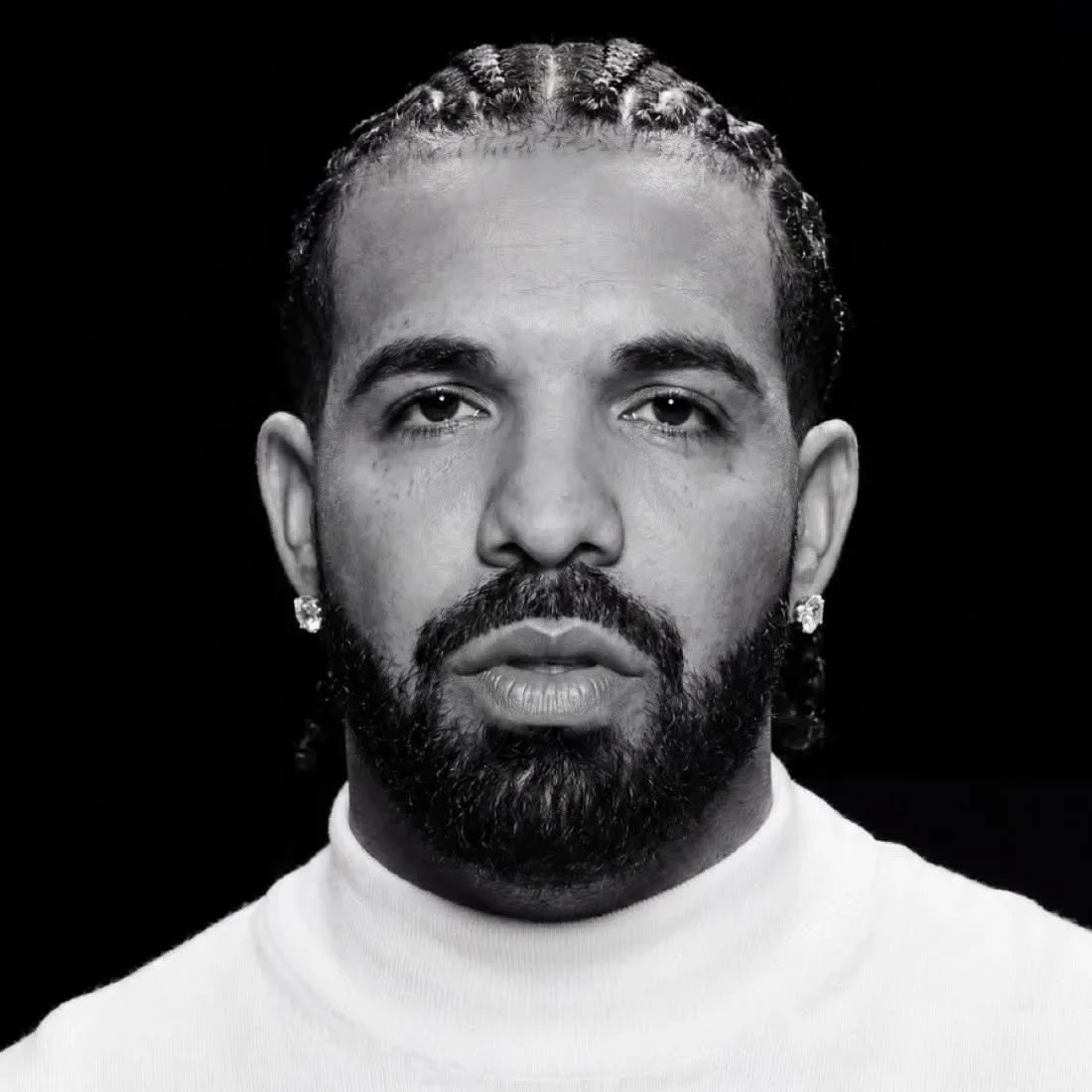
In recent rap history, few artists have changed the emotional temperature of the genre as much as Drake. Before him, there were already vulnerable rappers, streetwise R&B singers, mixtape stars and pop figures capable of crossing over to radio. What Drake did was combine all of that into one recognizable voice: the rapper who boasts and complains in the same line, the singer who turns a late-night text into a global chorus, the Canadian actor who made Toronto a sentimental capital of hip-hop. His career did not begin with a traditional performance of toughness. It began with a contradiction: he wanted to be the best rapper in the world, but he was also willing to sound hurt, romantic, insecure and painfully aware of his own fame.
Aubrey Drake Graham was born in Toronto, a city that would become inseparable from his artistic identity. Before OVO, the CN Tower, streaming records and massive Billboard statistics, he was Jimmy Brooks on Degrassi: The Next Generation. That acting past has often been used against his rap credibility, but it also explains part of his power. Drake understood earlier than most that contemporary hip-hop would not live on bars alone. It would live on character, narrative, public image, controlled intimacy and episodes that audiences could follow almost like a series.
His musical transition crystallized with So Far Gone in 2009. That project mattered because it did not sound quite like dominant rap at the time, nor like traditional R&B. It was nocturnal, emotional, atmospheric, full of spacious beats, confessional lines and a sense of melancholic luxury. “Best I Ever Had” opened the large door, but songs like “Successful,” “Houstatlantavegas” and “November 18th” revealed something more interesting: Drake was building a map of cities, desire, anxiety, ambition and calls that never end well. It was not only music for winning. It was music for checking your phone too late.
Thank Me Later placed him inside the major industry, but Take Care became the real manifesto. There, Drake found his most influential form: rap, R&B, soft electronics, vaporous samples, the emotional cold of Noah “40” Shebib’s production, ego and nostalgia. “Marvins Room” did not feel like a traditional rap single. It felt like a drunk confession that had escaped the studio. “Headlines” was elegant arrogance. “Take Care” with Rihanna turned fragility into sophisticated pop. That album changed the way many younger artists understood rap. You no longer had to choose between singing and rapping, hardness and sadness, club and diary. Drake made that blend a shared language.
Nothing Was the Same sharpened the architecture. “Started From the Bottom” compressed the rise myth into one line. “Hold On, We’re Going Home” revealed his cleanest pop ambition. “Worst Behavior” reminded listeners that beneath the melodic singer there was still a rapper obsessed with respect, hierarchy and remembered slights. By that point, Drake no longer sounded like the emotional newcomer. He sounded like someone building a city around his ego. Toronto stopped being only his origin and became an aesthetic brand: cold weather, night lights, cars, studios, clubs, high-rises, emotional distance.
If You’re Reading This It’s Too Late hardened the tone. Drier, more rap-centered, more competitive, it reminded people that Drake did not want to be read only as a pop singer. What a Time to Be Alive, with Future, connected him to Atlanta trap energy without fully removing him from his own center. Views turned his relationship with Toronto into something monumental. “One Dance” opened a global path through dancehall, afrobeats and light pop, while “Controlla” reinforced his instinct for absorbing Caribbean rhythms and turning them into mainstream language. That ability to pull from different scenes — dancehall, UK rap, afrobeats, Houston chopped-and-screwed atmosphere, Southern trap, alternative R&B — has been one of his greatest strengths and one of his most debated territories.
Scorpion showed Drake at full streaming-era scale: long, dominant, uneven, designed to occupy as many playlists as possible. “God’s Plan,” “Nice for What” and “In My Feelings” were different kinds of phenomena: viral generosity, a women-centered celebration built around Lauryn Hill, and a challenge-driven global hit. By then, Drake was no longer simply an artist. He was infrastructure. His music could live in clubs, cars, gyms, Instagram stories, weddings, memes, breakups and summer parties. Few artists understood as quickly that modern success did not depend only on having a hit, but on having songs for every possible context of use.
Certified Lover Boy, Honestly, Nevermind, Her Loss and For All the Dogs marked a more saturated and polarizing phase. Drake kept posting enormous numbers, but he also began carrying the weight of his own dominance. The formula that once felt new began to feel, for part of the public, like a familiar room: luxury, resentment, failed romance, caption-ready lines, grudges, flexes, women as mirrors of insecurity and humor that could be brilliant or exhausted depending on the song. Still, even on his most debated projects, the talent kept appearing: a perfect hook, a poisonous line, a small melody capable of staying in the head for weeks.
The PARTYNEXTDOOR collaboration $ome $exy $ongs 4 U pulled him back toward nocturnal R&B, closer to the Drake of calls, bedrooms, desire and winter Toronto. But the defining context of his recent chapter was the rivalry with Kendrick Lamar. Beyond who won the battle in the cultural consensus, the episode mattered because it put pressure on one of the central questions of Drake’s career: what does authenticity mean when an artist has been rapper, singer, actor, curator, brand, meme, businessman and global superstar at the same time? Drake’s answer was not to disappear, but to keep producing, keep occupying space and arrive at ICEMAN in 2026 with another demonstration of volume, presence and conversation control.
Drake matters because he altered the DNA of pop-rap. His influence lives in the melodic voice of countless artists, in the normalization of vulnerable rap, in the way cities can become moods, in the use of the internet as an emotional thermometer and in the idea that the modern artist can exist between song, meme, brand and confession. His career is huge, debated, influential and contradictory. That may be why he remains so central: Drake did not only make songs for a hyperconnected generation; he made that generation hear its own unsent messages as anthems.
Main genre
HIP HOP
Main subgenres
Like a superfan's list — except verified, with sources and links.

24–Mar 26, 2023
São Paulo, São Paulo · Brazil
Past
17–Mar 19, 2023
Santiago, Región Metropolitana de Santiago · Chile
Past
17–Mar 19, 2023
Buenos Aires, Ciudad Autónoma de Buenos Aires · Argentina
Past17–Mar 19, 2023
Sep 27 – Oct 06, 2019
Rio de Janeiro, Rio de Janeiro · Brazil
Past
17–Apr 19, 2015
Indio, California · United States
Past10–Apr 12, 2015
Indio, California · United States
PastWhat we managed to link to the concert archive. If a date is missing, tell us — happens to us too.
No linked concerts
Every concert and festival of the year, traced on the globe. Hit play and follow the route stop by stop.
 AMANominated
 BETNominatedAMANominatedAMANominatedBETNominatedBETNominatedBETNominatedBETNominatedBETNominatedBETNominated
 ARIANominatedBETNominatedBETNominatedBETNominatedBETNominatedBETNominatedBETNominatedBETNominated
 BillboardNominatedBillboardNominatedBillboardNominatedBillboardNominatedBillboardWonBillboardWonBillboardWonBillboardNominated
 BritNominated
Photos from the public archive.
Recent coverage linked to the artist.


Close by genre and social signal.
No related artists
When there is enough genre signal, they will appear here.