


























Ranking
#55

Ranking
#55
Followers
124.3 M
Digital presence
Official profiles, streaming and discovery.
What a good fan recites by heart (or pretends to).
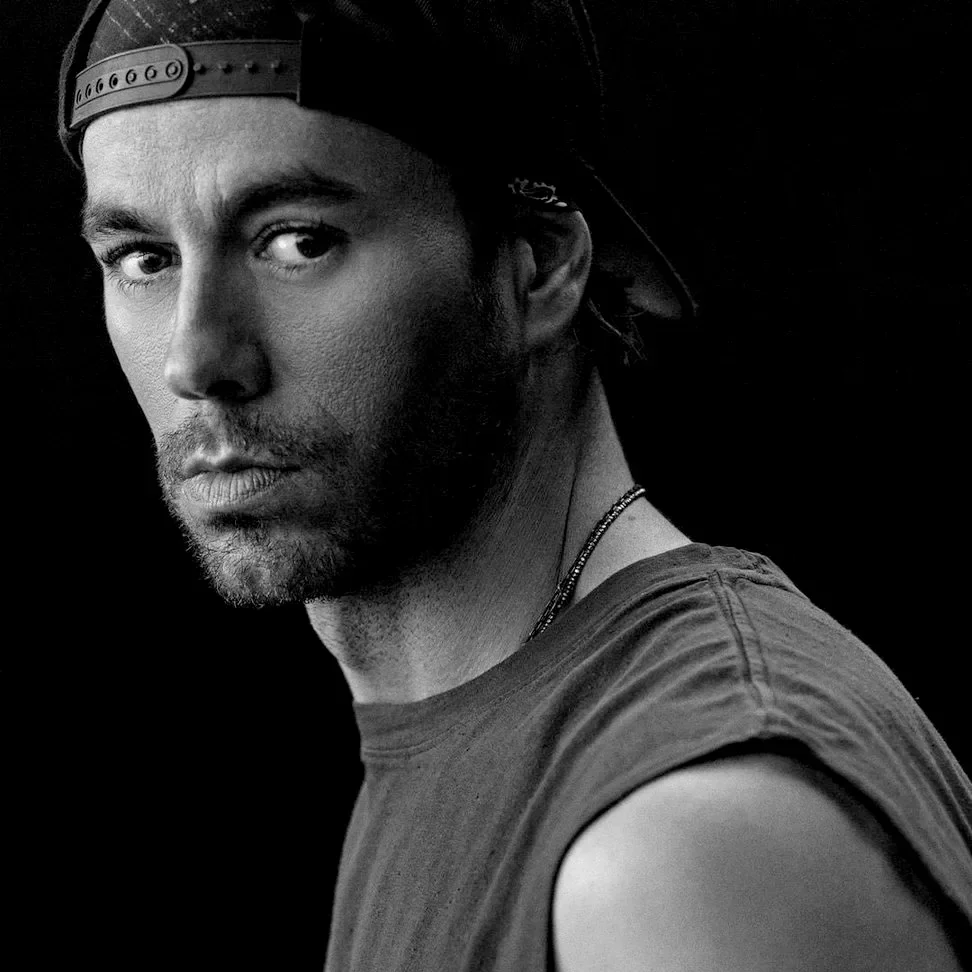
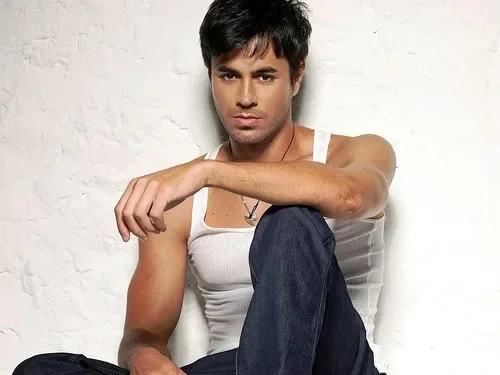
Enrique Iglesias is one of the figures who best explains how Latin pop moved from being a parallel market into becoming a global force. His career cannot be understood only through ballads, records or collaborations, but through a very particular tension: he was born into one of the most famous families in Spanish music, yet had to build his own identity almost in secret; he began by singing from romantic vulnerability and became an architect of Latin crossover; he was a ballad idol, an Anglo pop star, a dance figure, an urban collaborator and a symbol of a kind of pop able to move between languages without asking permission.
Born in Madrid, Comunidad de Madrid, Enrique Miguel Iglesias Preysler grew up under a public light he did not choose. Being the son of Julio Iglesias and Isabel Preysler meant being born with headlines, expectations, comparisons and a family story too large to ignore. But one of the keys to his career is precisely that he did not want to enter music as an heir. He recorded his first demos while hiding his identity, using the name Enrique Martínez, as if he needed to prove that his voice could open a door without his surname pushing it open. That gesture, almost like a pop novel, says a lot: Enrique did not want to be simply “the son of”; he wanted to know whether he could exist on his own.
His 1995 debut was an immediate strike. *Enrique Iglesias* arrived with intense ballads, romantic drama and a voice that did not aim for academic perfection, but for direct emotion. “Si tú te vas,” “Experiencia religiosa,” “Por amarte” and “Trapecista” built a very clear image: the young singer with a shy gaze, exposed heart and songs made to live love as urgency. In that first period, Enrique connected with an audience that still understood the Latin ballad as a space of grand confession: suffering, waiting, pleading, remembering, loving as if everything were at stake.
What made him interesting is that his romanticism never felt completely old-fashioned. Even when he sang traditional ballads, there was something younger, more televisual and more international in the way he presented himself. He was not the classic crooner or the solemn balladeer of another generation. Enrique carried a mix of shyness, pop appeal, fragility and ambition that brought him closer to young audiences. That combination allowed him to enter Latin America, Spain and the United States with unusual force for an artist singing mainly in Spanish.
The next major leap was crossover. “Bailamos” changed his career because it placed him at the center of the English-language market without fully abandoning his Latin identity. The song had Spanish guitar, desire, rhythm, drama and an accessible sensuality that could live on American pop radio without losing its Latin aroma. From there, Enrique understood something essential: he did not have to choose between being a Latin artist and being a global star. He could be both. That idea, now natural for many bilingual artists, was far less obvious in the late 1990s.
With *Enrique* and *Escape*, his figure became international on another level. “Rhythm Divine,” “Be With You,” “Hero,” “Escape” and “Love to See You Cry” showed an artist able to move between ballad, dance pop, soft pop rock and Latin pop without making the shift feel forced. “Hero,” in particular, became one of his most important songs because it condensed his emotional formula: simple melody, romantic promise, masculine vulnerability and a huge chorus. It is a song that may seem direct to the point of simplicity, but that is exactly where its power lies: Enrique knows how to make a universal phrase feel personal.
During the 2000s, his career became a constant conversation between languages and audiences. *Quizás* reaffirmed his bond with Spanish, even touching symbolically on family shadow and his relationship with his father. *7* and *Insomniac* showed more nocturnal and pop-oriented searches, while “Do You Know? (The Ping Pong Song)” confirmed his willingness to play with unexpected sounds. Enrique was not always an album-concept artist; his power lived more in the single, in the song capable of crossing countries, formats and life moments. His catalog is full of tracks that work like scenes: a breakup, a night, a reconciliation, a dance, a promise.
The *Euphoria* era was decisive because it connected him with the new Latin club sound and the global pop of the decade. “I Like It,” with Pitbull, opened a more festive and electronic door. “Tonight (I’m Lovin’ You)” took his image into a more nocturnal and provocative space. “Cuando me enamoro,” with Juan Luis Guerra, recovered romantic warmth. “Dirty Dancer,” with Usher, strengthened his dance side. Enrique stopped being only the ballad heartthrob and became a flexible figure of international party. His voice could live inside a love song or a club track, and that elasticity kept him relevant.
Then came “Bailando,” one of the most important songs of his later career. With Descemer Bueno and Gente de Zona, Enrique found a perfect formula between guitar, Caribbean rhythm, Latin pop, desire and celebration. The song worked because it did not sound like a cold attempt to jump on a trend; it sounded organic, joyful, physical and global. “Bailando” confirmed that Enrique could still occupy the center of the Latin conversation when new generations were already dominating the scene. Later, collaborations with Nicky Jam, Wisin, Bad Bunny, Farruko, María Becerra, Yotuel or Myke Towers showed his ability to adapt to the urban movement without pretending he was a new artist.
His relationship with privacy also matters. Unlike many stars of his size, Enrique has built an enormous career while keeping his personal life relatively closed. He speaks little, appears carefully, avoids feeding the media spectacle too much and protects his family. That distance has contributed to his mystery. In an era when almost everything is shared, Enrique keeps something of the classic star: the song goes out into the world, but the person remains reserved.
His decision to close the album era with *Final Vol. 1* and *Final Vol. 2* sounds less like a total retirement than an acceptance that the industry has changed. He no longer needs to prove anything through long albums. His legacy lives in songs that crossed decades, languages, radio, weddings, soap operas, stadiums, clubs and playlists. He can still release songs, tour and appear whenever he wants, because his place is already built.
Enrique Iglesias matters because he was one of the great bridges between the Latin ballad of the 1990s, English-language pop at the turn of the millennium and global Latin music in the streaming era. He helped normalize bilingualism as a pop strategy, took Spanish romanticism to worldwide scale and proved that a Latin artist could conquer the English-language market without erasing his origin. At his best, Enrique sounds like a summer night with an impossible promise: sentimental, catchy, slightly dramatic and made to be sung as if we had all lived exactly that story.
Main genre
LATIN
Main subgenres
Like a superfan's list — except verified, with sources and links.
No linked festivals
No festival appearances documented yet.
What we managed to link to the concert archive. If a date is missing, tell us — happens to us too.
No linked concerts
Every concert and festival of the year, traced on the globe. Hit play and follow the route stop by stop.
 Billboard LatinNominatedBillboard LatinNominatedBillboard LatinNominated
Photos from the public archive.
Recent coverage linked to the artist.


If you like Enrique Iglesias, these move through the same lineups.