Ranking
#17

Ranking
#17
Followers
275.3 M
Digital presence
Official profiles, streaming and discovery.
What a good fan recites by heart (or pretends to).
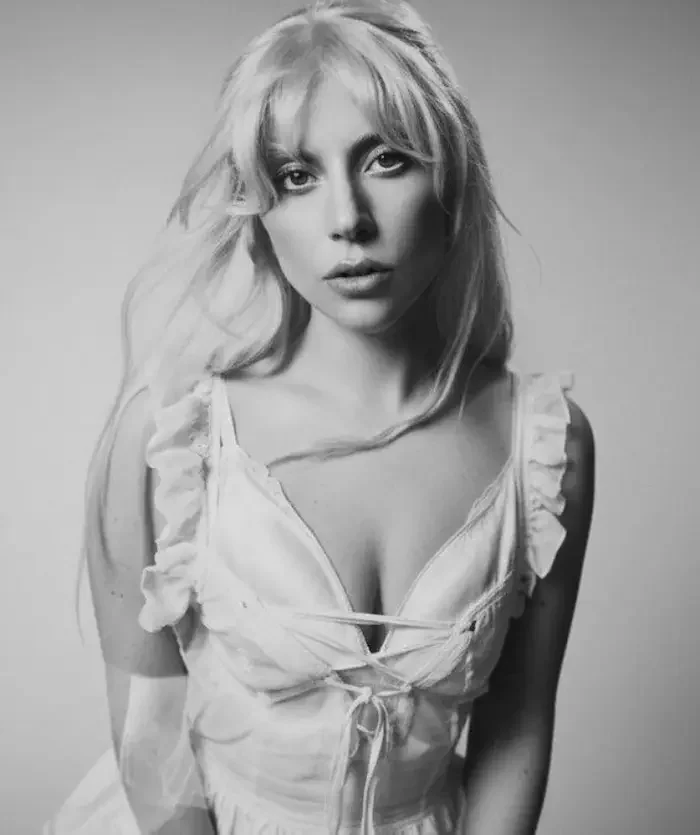
Lady Gaga’s first major arrival felt less like a normal pop debut and more like a theatrical invasion. She did not seem merely like a new singer entering the charts; she seemed like a creature from an underground club arriving to redesign radio, fashion and the body of the pop star. At a time when pop could be glossy but also fairly domesticated, Gaga appeared with wigs, impossible glasses, synthesizers, huge hooks, references to Warhol, Bowie, Madonna, Queen, burlesque, performance art and a very clear idea: fame was not only an outcome. It was artistic material. You could sing about it, dress like it, parody it, suffer from it, sell it and destroy it in the same gesture.
Stefani Joanne Angelina Germanotta was born in New York, and that New York root matters because Lady Gaga was not built only through the record industry. Before becoming a global superstar, she was a piano girl, a bar performer, a songwriter, a nightlife figure and someone hungry for the stage. Her transformation from Germanotta into Gaga was not simply a name change; it was a method. Instead of waiting for someone to manufacture an identity for her, she began manufacturing it herself: music, fashion, character, gesture, provocation, community. The early Gaga understood that pop could be song, but it could also be visual architecture. It could live in the club and still feel like an installation.
The Fame was the first strike. “Just Dance” and “Poker Face” worked as perfect pieces of late-2000s dance pop: polished production, immediate choruses, synthetic cool and a voice that sounded robotic and human at once. But the most interesting thing was the concept. Lady Gaga did not speak about fame as someone already comfortably inside it. She spoke about it like someone studying it, desiring it and turning it into a mask. “Paparazzi” was crucial because it revealed the darker side of wanting to be seen: romance, cameras, pursuit, symbolic death, spectacle. Gaga did not only want to enter pop; she wanted to prove pop could think about itself.
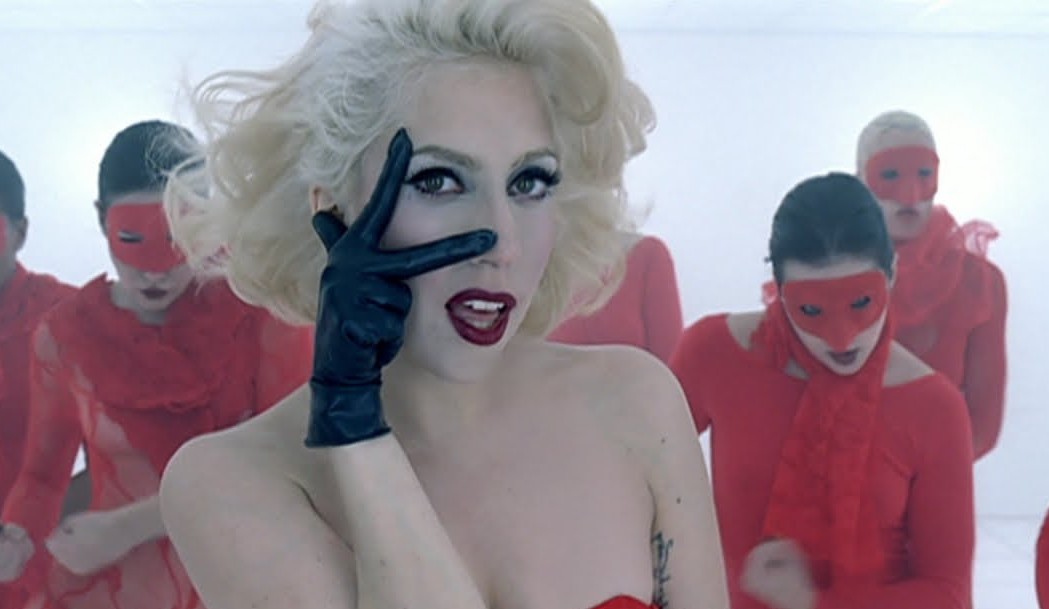
The Fame Monster expanded that idea. “Bad Romance” was not simply a massive hit; it was a kind of gothic manifesto for the dance floor. The song blended desire, fear, obsession and theatricality with almost architectural precision. “Telephone,” with Beyoncé, turned the music video into a cultural event, and “Alejandro” pushed melodrama into a military, religious and queer visual world. In that period, Gaga became strange and central at the same time: too artistic to feel like conventional pop, too massive to remain alternative. Her audience, the Little Monsters, did not follow her only for songs. They followed her because she offered a place where weirdness could become power.
Born This Way turned that relationship with the audience into a direct statement. The album was excessive, ambitious, loud, sometimes messy, but deeply important to understanding her impact. “Born This Way” became an identity anthem, especially for LGBTQ+ communities. “Judas” mixed religion, desire and betrayal with calculated provocation. “The Edge of Glory” found a brighter, almost stadium-rock kind of grandeur. Gaga was not afraid to sound too big. If anything, she seemed convinced that certain emotions needed excess in order to exist: acceptance, guilt, sexuality, faith, pain, pride.
ARTPOP was the moment when her own machine began to weigh on her. The project had strong ideas — art, celebrity, technology, body, desire — but it arrived under such intense expectation that it became difficult to hear the album outside the noise surrounding it. Still, “Applause” remains profoundly Gaga: a song about needing applause that does not pretend to be pure. After that, Cheek to Cheek with Tony Bennett opened an unexpected but deeply coherent path: Gaga as standards singer, disciplined interpreter, theatrical voice capable of leaving electro-pop and standing inside a classic vocal tradition. That collaboration reminded people of something sometimes lost beneath the outfits and controversies: Gaga can truly sing.
Joanne lowered the scale and searched for a more human, American, guitar-and-piano image. “Million Reasons” revealed a direct vulnerability without so many layers of character. Then A Star Is Born gave her a symbolic second life. As Ally, Gaga connected her own story to a narrative of talent, ascent, love, sacrifice and exposure. “Shallow” became enormous because it needed no disguise: two voices, one emotional climb, one existential question. Her success in film did not feel like a pop star’s vanity project, but like a natural extension of someone who had always understood the stage as performance.
Chromatica brought her back to dance from a wounded place. Beneath the beats of “Stupid Love,” “Rain on Me” and the album’s electronic pulse were trauma, depression, recovery and an almost physical need to turn pain into movement. Harlequin, created around Joker: Folie à Deux, reinforced her connection to theater, jazz, character and heightened performance.
MAYHEM closed a circle without becoming simple nostalgia. With “Disease,” “Abracadabra” and “Die With a Smile,” Gaga returned to her dark, danceable, theatrical territory, but not as the young artist who needed to prove her strangeness. She returned as an adult artist who understands the cost of sustaining it. The chaos in the title was not only noise; it was a way of rearranging pieces of her own myth.
Lady Gaga matters because she turned difference into spectacle, spectacle into community and community into a form of pop survival. Her career joins club music, piano, fashion, film, jazz, activism, monsters, pain, humor, artifice and discipline. At her best, Gaga does not separate the mask from the truth. She proves that sometimes a carefully built mask is what allows the most honest thing to be said.
Main genre
POP
Main subgenres
Like a superfan's list — except verified, with sources and links.

18–Apr 20, 2025
Indio, California · United States
Past11–Apr 13, 2025
Indio, California · United States
Past21–Apr 23, 2017
Indio, California · United States
Past14–Apr 16, 2017
Indio, California · United States
PastWhat we managed to link to the concert archive. If a date is missing, tell us — happens to us too.
No linked concerts
Every concert and festival of the year, traced on the globe. Hit play and follow the route stop by stop.
Photos from the public archive.
Recent coverage linked to the artist.




Close by genre and social signal.
No related artists
When there is enough genre signal, they will appear here.