Ranking
#160

ELECTRONIC ROCK - INDIE - ROCK
Ranking
#160
Followers
580 K

When
04–AUG 08, 2027
Featured artists
Lineup coming — we'll publish it as soon as it's confirmed.
Time left
13 editions to explore · future, live and past
Numbers, home base and house quirks
Boardmasters begins at the Atlantic before the main music arena has fully come to life. At Fistral Beach, tides, wind and wave quality determine a timetable no production manager can completely control. Surfers wait on the sand while judges and spectators study the horizon; several miles north, Watergate Bay prepares for guitars, pop, rap and electronic music on the clifftop. That physical separation explains the event better than any single line-up poster. Boardmasters is not a conventional music festival that later added a sporting attraction. It began with surfing and gradually built a second, much larger identity without allowing the original competition to become a decorative side event.
Its history reaches back to 1981, when Newquay was already developing into the centre of British surf culture. Early editions belonged to a network of local clubs, board shapers, specialist shops and travelling competitors rather than to the modern festival industry. Music expanded over time, and Watergate Bay became the principal concert site in 2005. From that point, Boardmasters evolved into a five-day coastal gathering capable of attracting several different audiences. Some visitors follow professional surfing, others arrive for headline music and camping, while local families may spend the day at Fistral without entering the ticketed arena. All of them temporarily occupy the same stretch of Cornwall.
Fistral Beach remains closest to the event’s origins. It hosts the Boardmasters Open, longboard competitions, skate contests, workshops, talks and ocean-focused activity. Entry to this part of the festival is free, keeping the surf programme connected to residents, tourists and people who have not purchased a music ticket. Its atmosphere is less enclosed and less predictable than Watergate Bay. Competition times depend on the sea; people can wander between the beach, skate ramp and market without following one rigid route. The presence of lifeguards, surf organisations and environmental groups also reminds visitors that the coast is not merely scenery behind an entertainment product, but a working and sometimes dangerous natural environment.
Watergate Bay provides the larger festival world. Camping grounds, the Main Stage, the Mordros tent, the dance-focused Unleashed arena and smaller venues occupy the high land above the beach. Here the ocean remains visible, but it competes with sound systems, screens, food areas and the movement of tens of thousands of people. Days begin among tents and slowly build toward the main programme. Sunset often becomes part of the performance, especially when the weather opens the view across the water. By night, the clifftop is transformed into a temporary town whose inhabitants navigate stages, paths, meeting points and late-night electronic sets before returning to campsites exposed to the Cornish air.
The musical identity has become deliberately broad. Indie and British guitar music remain important, but pop, rap, R&B, drum & bass, house, garage and large-scale electronic acts now carry equal weight. Ed Sheeran, Snoop Dogg, Florence + The Machine, Kings of Leon, Liam Gallagher, Stormzy, Lorde, The Chemical Brothers, Sam Fender and The Prodigy belong to very different musical histories, yet all make sense within Boardmasters’ changing audience. Its coherence does not come from one genre. It comes from a specific idea of the British summer: camping near the coast, moving between singalong bands and bass-heavy tents, and waking to the knowledge that a professional surf competition is unfolding elsewhere in town.
Travel is part of the experience and one of its principal pressures. Newquay is a relatively small coastal destination absorbing festival crowds during an already busy holiday period. Roads, trains, buses and accommodation become heavily used, while shuttle services connect the railway station and surrounding areas with Watergate Bay. Camping visitors enter a multi-day system, but day-ticket holders must plan their departure after headline performances. Fistral and Watergate Bay are separate locations rather than neighbouring stages, so experiencing both properly requires time. This inconvenience also gives Boardmasters its distinctive scale: it does not occupy one park but stretches across beaches, roads, accommodation and public spaces around Newquay.
The most recent fully completed edition took place in August 2025. RAYE, Central Cee and The Prodigy represented three different centres of contemporary British festival culture: emotionally detailed pop and soul, globally successful UK rap and the continuing physical force of rave music. At Fistral, Lukas Skinner defended his men’s title while Annette Gonzalez-Etxabarri won the women’s competition. Those parallel stories demonstrate why Boardmasters cannot be judged only by its main-stage headliners. For one part of the audience, the defining memory may be a performance beneath the lights; for another, it may be a final decided by the arrival of a single wave.
The 2026 festival is taking place from 5 to 9 August and is still underway. Fatboy Slim, Lily Allen and Kasabian lead a programme that also includes The Kooks, Loyle Carner, Tash Sultana, Rudimental, Pendulum, James Arthur, Dizzee Rascal and a wide emerging line-up. At Fistral, the surf and longboard competitions again depend upon the Atlantic rather than a fixed indoor schedule. More than four decades after the original contest, Boardmasters continues to balance two forms of spectacle: one produced through months of planning and another created by wind, tide and timing. The stages can be built to precise measurements. The sea remains free to alter the story.
Genres
ELECTRONIC ROCK
INDIE
ROCK
Timeline
One artist per year — highest ranked in our archive
Those who appear most across this franchise's editions.
 #1
#1New Zealand
1 editions · 2023
 #2
#2United Kingdom
1 editions · 2023
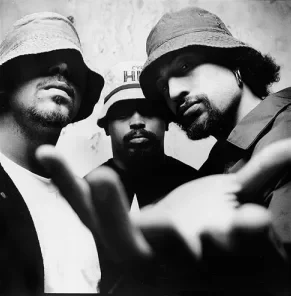 #3
#3United States
1 editions · 2023