

Ranking
#509

POP - ROCK
Ranking
#509
Followers
127.2 K
1 editions to explore · future, live and past
 2016
Desert Trip 2016
Numbers, home base and house quirks
Late afternoon at the Empire Polo Club usually means a festival is only beginning to reveal its complications: stages pulling crowds in opposite directions, overlapping sets and a schedule that requires constant negotiation. Desert Trip removed almost all of that machinery from view. There was one enormous stage, two artists per night and no meaningful choice to make once the music began. Performances started after the desert sun had softened, and each act was given room for a full concert. On the same grounds where Coachella had perfected abundance, Goldenvoice built a festival around deliberate scarcity.
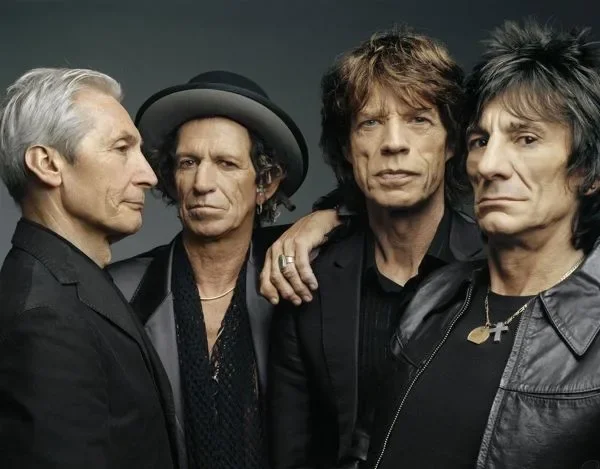
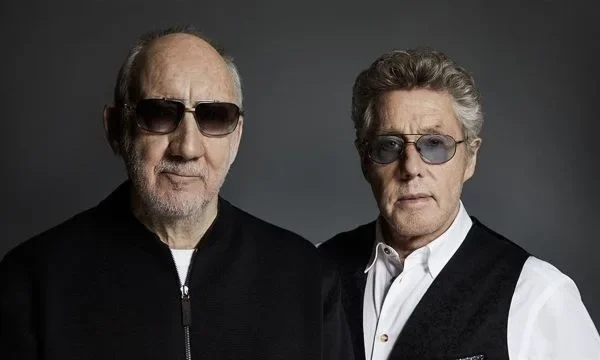
Paul Tollett’s concept was audacious precisely because the lineup was so small. Bob Dylan, The Rolling Stones, Neil Young, Paul McCartney, The Who and Roger Waters were not six names extracted from a much longer poster; they were essentially the entire proposition. Each could headline an arena or major festival alone, and together they represented several competing strands of postwar rock history. Demand turned the original October 7–9, 2016 weekend into two identical weekends, with the program repeated October 14–16. More than 150,000 people ultimately passed through an event marketed from the beginning as the kind of gathering that might never be assembled again.
Its nightly pairings gave Desert Trip an unusually clear dramatic shape. Dylan led into the Stones on Friday, Neil Young and Promise of the Real preceded McCartney on Saturday, and The Who handed Sunday night to Waters. There were no conventional opening acts and no secondary stage offering an escape route. That focus exposed differences that a broader festival might have blurred. Dylan could withhold easy nostalgia; the Stones turned familiar songs into physical theatre; Young stretched material through ragged electric improvisation; McCartney worked with the communal force of a catalogue almost everyone knew; The Who attacked their songs rather than preserving them; Waters treated the entire field as part concert, part audiovisual installation.
The weekend also produced moments that made the artists’ shared history visible rather than merely implied by the poster. The Rolling Stones performed The Beatles’ “Come Together”; McCartney later brought Neil Young onstage, while Rihanna’s appearance during the second weekend briefly connected the gathering to a much younger pop present. Dylan returned for his October 14 set one day after the announcement that he had won the Nobel Prize in Literature. Waters, meanwhile, closed the nights with elaborate Pink Floyd imagery, spatial sound and pointed political material. Desert Trip could easily have become an expensive museum of canonical rock, yet its most revealing performances often came when the musicians resisted being treated as exhibits.
Offstage, Goldenvoice rethought what a large festival could look like for an audience expected to skew older than Coachella’s. Large reserved-seating sections and backed grandstands occupied much of the field, while general admission, luxury areas, RV and tent camping, hotel packages and unusually ambitious food programs broadened the range of ways to attend. An air-conditioned exhibition of vintage rock photography offered both historical context and refuge from the daytime heat. Flushable restrooms became an oddly symbolic detail: creature comforts were not incidental additions but part of the event’s design. Desert Trip acknowledged that veteran concertgoers might still want scale and spectacle without pretending they wanted the standard physical ordeal of a three-day festival.
Indio nevertheless remained unmistakably Indio. Temperatures climbed into triple digits during the opening weekend, traffic complicated arrival, and dust could move across the polo grounds as the day wore on. The gates opened in the afternoon, leaving hours before the first music at around 6:30 p.m., so the festival’s rhythm depended heavily on sunset. Once the mountains darkened and the desert temperature began to fall, all 75,000 people on a given weekend were effectively pointed toward the same stage. There was little of Coachella’s sensation of discovering a tiny act in a distant tent. Desert Trip substituted discovery with concentration: the pleasure came from hearing familiar music at unusual scale and in unusual company.
That concentration also sharpened the event’s central contradiction. Much of this music had emerged from youthful counterculture, anti-establishment politics and eras when rock liked to imagine itself as a democratic language. Desert Trip presented it through premium seating, costly packages, sophisticated hospitality and record-breaking commercial scale. The joking “Oldchella” nickname captured the easiest version of that contradiction, but the crowd was less uniform than the label suggested. Reporting from the weekends found families, younger listeners and visitors from around the world alongside the expected baby-boomer audience. What united them was not simply nostalgia but the rare chance to see several branches of rock history occupying one physical space.
Goldenvoice could easily have converted that commercial success into an annual brand. It chose not to. In 2017 Tollett ruled out an immediate return and said he liked the idea of keeping Desert Trip distinctive rather than instantly turning it into another franchise festival. Goldenvoice later explored related one-off concepts at the same grounds with Power Trip and Head Trip, but those are separate events rather than subsequent Desert Trip editions. That leaves the 2016 gathering unusually self-contained. Its defining achievement was not the size of its poster but the discipline of removing almost everything from it: six artists, one stage, two desert weekends and enough time for each performance to stand beside the others without being reduced to another slot in a crowded festival day.
Genres
POP
ROCK
Timeline
One artist per year — highest ranked in our archive
Those who appear most across this franchise's editions.