Ranking
#1,247

JAZZ - POP - ROCK
Ranking
#1,247
When
2027
Featured artists
Lineup coming — we'll publish it as soon as it's confirmed.
9 editions to explore · future, live and past
Numbers, home base and house quirks
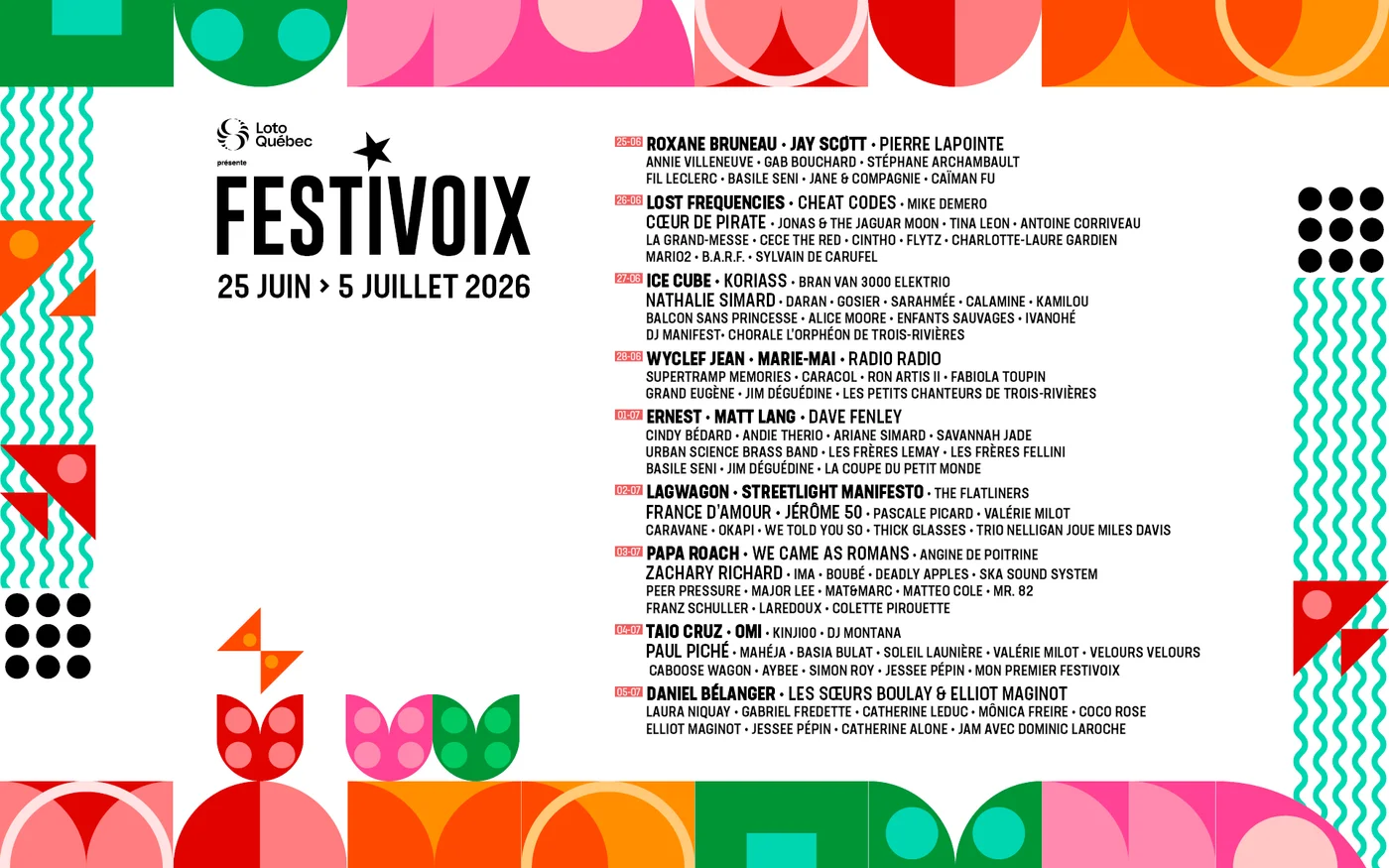
In high summer, when heat settles over the St. Lawrence River, Trois-Rivières stops feeling like a waypoint between two larger cities and becomes a living score. Historic streets, waterfront edges, and heritage façades fill with temporary stages, queues outside a bar turned concert hall, and the easy chatter of people comparing sets they have just left with the ones they are heading toward. FestiVoix works that way: not as a fenced enclosure, but as an urban fabric where the voice—in every guise—remains the thread holding together a celebration that took decades to reshape without forgetting where it began.
That beginning was municipal and intentional. In 1993, the Ville de Trois-Rivières launched the International de l'Art Vocal, a festival designed to champion singing at a moment when choral music was gaining ground across Quebec. The first edition, at Parc Champlain, centred the programme on vocal art, with a stage devoted to choral performance. It emerged partly to fill the gap left by several local festivals that had disappeared in the previous decade, and to assert the cultural identity of a city positioned between Montreal and Quebec City—outside the metropolitan spotlight yet determined to build its own musical landmark.
The following years brought professionalisation and scale. Under Daniel Gélinas’s direction, from 1997 to 2001, the event raised its profile with concerts conceived as happenings and expanded its international reach. Audience growth—on one early-2000s edition surpassing a hundred and fifty thousand attendances across eight days—prompted the city to develop new infrastructure at the port park. What had started as a vocal wager became a summer fixture capable of drawing established names from Quebec chanson and placing Trois-Rivières on the province’s warm-weather calendar.
The 2008 renaming as FestiVoix de Trois-Rivières marked a new identity without erasing memory. The organisation, now an independent non-profit under the FestiVoix de Trois-Rivières banner, sought to mirror programming that had long outgrown academic singing: jazz, pop, rock, chanson, world voices, folk, traditional music, and electronic projects share bills organised under families such as Voix jazz, Voix émergentes, Voix populaires, and Voix multiples. The tension is productive: a festival born to honour the voice as craft became a festival of all voices, keeping the curatorial logic that makes each stage feel distinct.
The contemporary format is urban and wide-ranging. For nine consecutive days, more than a hundred and thirty shows unfold across fifteen stages scattered through downtown, the historic quarter, the riverside, and the port park. Each platform carries its own atmosphere and staging; the point is not to repeat the same concert in different locations, but to offer separate routes through one city. More than six hundred artists—established and emerging, local and international—pass through those platforms in a typical edition, making FestiVoix one of Mauricie’s weightiest cultural and tourist events and a symbolic opening chord for Quebec’s summer season.
Programming balances accessibility with ambition. Roughly one third of performances are offered free of charge, with the scène du Quai among the emblematic spaces of that policy. Children aged ten and under enter general admission at no cost, drawing families into a festival built for discovery as much as for the practical ease of a central, walkable setting. Pop, rock, and jazz sit at the heart of the event’s current identity, alongside chanson, choirs, traditional music, and developing artists who find real—not token—exposure through emerging-voice categories.
To picture the audience experience is to picture walking. You arrive downtown and the venue is not singular: it is a sequence of squares, quays, heritage courtyards—such as the Ursulines monastery yard or the terrasse Turcotte—and bar rooms turned intimate stages. Daytime mixes tourists, neighbours, and provincial visitors; after dark, lines stretch toward higher-profile concerts while the river stays a constant backdrop. There is no camping trek across open fields: the city is the venue, and that reshapes the relationship between performer and listener—closer, less ceremonial than at sprawling countryside mega-festivals.
That closeness extends to social and environmental responsibility. For more than fifteen years, FestiVoix has woven sustainable development into planning—transport, waste, energy efficiency, accessibility for people with reduced mobility—in collaboration with local and industrial partners. Regional and national awards in tourism, culture, and volunteer management reflect an organisation that treats the festival as civic infrastructure rather than an isolated show. Hundreds of thousands of visits during a mature edition confirm the trust of Mauricie, Quebec, and international audiences alike.
What endures, beyond scale, is the wager on voice as shared territory. FestiVoix is not reducible to a headline list: it is choirs debuting repertoire beside the water, songwriters in downtown bars, jazz ensembles in historic patios, and pop stars facing the port. Trois-Rivières lends itself as a stage because the festival learned to inhabit it without flattening it, making urban heritage part of the performance. In the pull between vocal origins and a multigenerational present lies its character—a gathering where the whole city sings each summer, with different voices under the same Mauricie sky.
Genres
JAZZ
POP
ROCK
Timeline
One artist per year — highest ranked in our archive
Those who appear most across this franchise's editions.
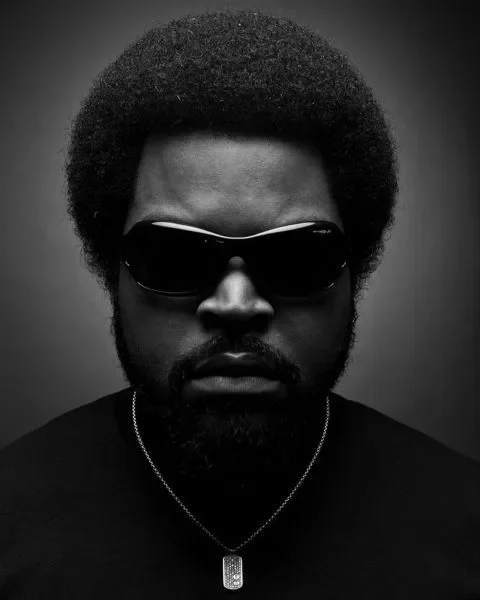 #1
#1United States
1 editions · 2026
 #2
#2United States
1 editions · 2026
 #3
#31 editions · 2026