Ranking
#145

INDIE - METAL - ROCK
Ranking
#145
Followers
671.7 K
When
18–SEP 20, 2026
Where
Chicago, Illinois
Country
United States
Featured artists
Lineup coming — we'll publish it as soon as it's confirmed.
12 editions to explore · future, live and past
Numbers, home base and house quirks
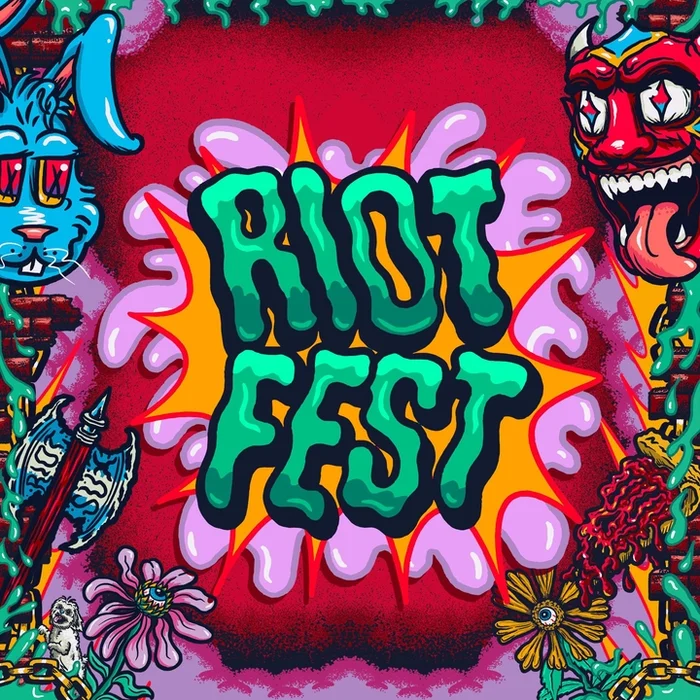
Riot Fest is one of those festivals that cannot be understood only through its lineup, even though the lineup is almost always part of the punch. It is understood through attitude. It was born in Chicago in 2005 with a very different energy from large corporate festivals: more sweaty venue than perfect field, more punk flyer than luxury campaign, more love for strange bands, impossible reunions and obsessive audiences than for chasing whatever was fashionable that week. From the beginning, Riot Fest felt like a refuge for people who grew up with dirty guitars, scratched records, black T-shirts, acidic humor and an intense relationship with their favorite bands.
The first edition opened at the Congress Theater with Dead Kennedys, The Misfits and a reunited Germs, which already said everything about the intention. Riot Fest did not want to sound correct. It wanted to sound like a love letter to punk, hardcore, alternative rock and the scenes that often live on the margins, even when they eventually fill huge parks. During its early years, the festival operated across several Chicago venues, like a night circuit where the city mattered as much as the bands. That multi-venue stage gave it character: Riot Fest was not born as a main-stage monster, but as a network of shows built with stubbornness, friends, chaos and faith in music.
Over time it grew and moved outdoors. First came Humboldt Park, then Douglass Park, and there Riot Fest found its modern shape: three days, many bands, stages, carnival rides, food, wrestling, oddities, inside jokes, nostalgia and a mix of audiences that do not always appear together at other festivals. At Riot Fest, someone there for classic punk can stand next to someone there for emo, metal, hip-hop, ska, indie, pop punk, post-hardcore, modern hardcore or a reunion they have been waiting years to see. That breadth did not make it generic; it made it feel more like a collection of obsessions.
One of its strongest signatures is reunions and special moments. Riot Fest has built part of its legend around bands coming back, albums played in full, rare appearances and lineups that feel like they were made by someone who understands how fan memory works. The Replacements, Misfits, Jawbreaker and other reunions are not minor details: they explain why Riot Fest has such an emotional relationship with its audience. It is not only about “seeing a band.” Many times it is about closing an adolescent wound, fulfilling an internet forum fantasy or hearing live a song that seemed destined to remain inside headphones.
The real experience of attending is physical and very Chicago. Douglass Park is not a neutral landscape: it is an urban park with history, community tensions, complex logistics and a direct relationship with the city. Getting there means trains, walking, lines, dust or mud depending on the weather, afternoon heat, nighttime chill, painful schedule conflicts and the feeling of a festival where almost every T-shirt has a story behind it. It is not the most polished festival, and it does not try to be. Its charm lies in that mix of controlled disorder, inside jokes, noise, community and songs people sing as if they were still seventeen.
The 2026 edition shows its current personality very clearly: Twenty One Pilots, Iggy Pop, Rise Against, Pixies, Alkaline Trio, Tool, Morrissey, Social Distortion, Nas, Bad Religion, Descendents, Gogol Bordello, Pierce The Veil, Alanis Morissette, Elvis Costello, Patti Smith, Taking Back Sunday, Insane Clown Posse and Pennywise in the same weekend. From the outside, that mixture might look absurd. For Riot Fest, it makes sense. This is a festival where nostalgia is not organized by genre, but by emotional intensity.
What makes Riot Fest different is that it keeps an identity even as it grows. It can book huge names, but it still feels like a party organized by fans with a strange sense of humor and a very long musical memory. It is punk, even if it is no longer only punk. It is Chicago, even if it attracts people from across the country. It is a festival for shouting, remembering, discovering, arguing over schedule conflicts and believing again that a band can matter far too much.
Genres
INDIE
METAL
ROCK
Those who appear most across this franchise's editions.
No top artists
Not enough cross-signal between this franchise and the archive yet.