
Ranking
#540

HIP HOP - POP - ROCK
Ranking
#540
Followers
114.1 K
1 editions to explore · future, live and past
Numbers, home base and house quirks
There is a point during Campus Fesztivál when it becomes easy to forget that the event sits inside Hungary’s second-largest city. Mature trees cover much of Nagyerdő, stage light cuts through branches, and crowds can move from rap into rock, electronic music, a university programme or theatre without ever quite leaving the greenery. Then Nagyerdei Stadion reappears through the site and restores the urban context. That combination — forest and city, national-scale festival and distinctly Debrecen institution — has become one of Campus’s defining qualities. It feels large without relying on a remote field, and local even when an international star is standing on the biggest stage.
The Campus name arrived in 2008, although the organisational lineage was already several years old. Earlier events around Vekeri Lake had developed under the Vekeri-tó Fesztivál name, and in 2007 the same area hosted a particularly successful edition of EFOTT. In July 2008 the location remained but the identity changed: Campus Fesztivál was launched. Roughly 27,000 people attended despite difficult weather, with Tankcsapda, Quimby, Kispál és a Borz, 30Y and Péterfy Bori & Love Band among a programme that already stretched beyond concerts into sport, film, comedy and public culture. Campus was therefore less a sudden invention than the next form of a festival culture Debrecen had been developing for years.
The decisive change came in 2009, when the festival left Vekeri-tó and moved into Nagyerdő. Attendance immediately passed forty thousand, and the new setting brought Campus much closer to the city and University of Debrecen. Over time the temporary festival site grew around Nagyerdei Stadion, the water tower and surrounding wooded event spaces. That geography gives a large summer festival an unusual practical advantage. Public transport and urban accommodation remain accessible, yet considerable parts of the audience spend the day beneath trees rather than on an exposed agricultural field. Camping still allows visitors to make a complete weekend of it, while local residents can enter from the city itself.
Musically, Campus grew by becoming almost encyclopaedic about Hungarian popular culture. Debrecen’s own Tankcsapda carries particular emotional weight, but successive editions have moved through rock, pop, rap, indie, metal and electronic music without treating those audiences as incompatible. Veterans who have been playing for decades can share the site with performers whose careers accelerated only months earlier. This breadth is more important than any single stylistic identity. Campus operates as a huge annual survey of Hungarian live music, while international bookings add another layer rather than replacing the domestic core. For many Hungarian acts, appearing at Nagyerdő has become part of the normal geography of a successful summer.
The international side became more ambitious after the pandemic. Campus was cancelled in 2020, then returned in 2021 with Hungarian artists only and still attracted around 87,000 visits over four days. International touring resumed in 2022 with Tiësto, AURORA, Sigala and Zara Larsson. ZAZ, Robin Schulz, Parov Stelar and ATB followed in 2023; Rita Ora and Dimitri Vegas & Like Mike helped shape 2024; Jason Derulo, The Chainsmokers and John Newman were among the international names in 2025. Those bookings moved Debrecen closer to the wider European circuit, but Campus never became simply another imported festival package. Hungarian artists continued to occupy the overwhelming majority of its stages.
The university relationship is equally important. “Campus” is not merely an old youth-oriented brand name. University of Debrecen actively participates through Egyetem Tér, institutional programmes and its own music stage, mixing academic life with the festival environment. Science demonstrations, talks, civil organisations, sport, theatre, comedy and family programming coexist with the music. That makes the daytime rhythm different from a festival built solely around headliners. Somebody arriving to see a rapper can stumble into a university project, a community initiative or a cultural programme that would rarely receive equivalent visibility elsewhere. Even as total attendance has moved beyond one hundred thousand visits, Campus still treats Debrecen itself as part of the content.
The eighteenth completed edition in 2026 again drew approximately 121,000 visits. Armin van Buuren and Scooter provided major international moments, while Azahriah, Beton.Hofi, Majka, Halott Pénz, Carson Coma, Tankcsapda, Quimby and much of Hungary’s current mainstream and alternative landscape filled a programme of more than three hundred musical productions across twenty-one locations. By then the question was no longer whether Campus belonged among Hungary’s major festivals. The challenge was how to maintain comfort, shade, local access and a recognisable personality at that size. Food areas, cultural spaces, university zones and smaller music stages turn Nagyerdő into a temporary city nested inside Debrecen for four summer days.
The next Campus Fesztivál is confirmed for July 14–18, 2027. If held as planned, it will be the nineteenth completed edition under the current name. The numerical distance from 27,000 visitors at Vekeri Lake to recent crowds above 120,000 is enormous, but the underlying idea remains recognisable: bring many different parts of Debrecen’s cultural life together rather than isolate one scene. When the final night ends, the temporary structures disappear and Nagyerdő becomes parkland, university district and woodland again. For a few days every July, however, those trees serve as the roof over one of Hungary’s largest musical gatherings.
Genres
HIP HOP
POP
ROCK
Timeline
One artist per year — highest ranked in our archive
Those who appear most across this franchise's editions.
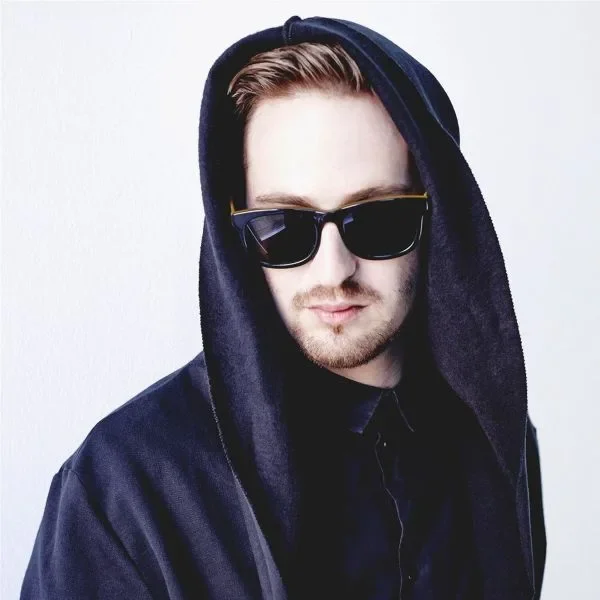 #1
#1Germany
1 editions · 2023
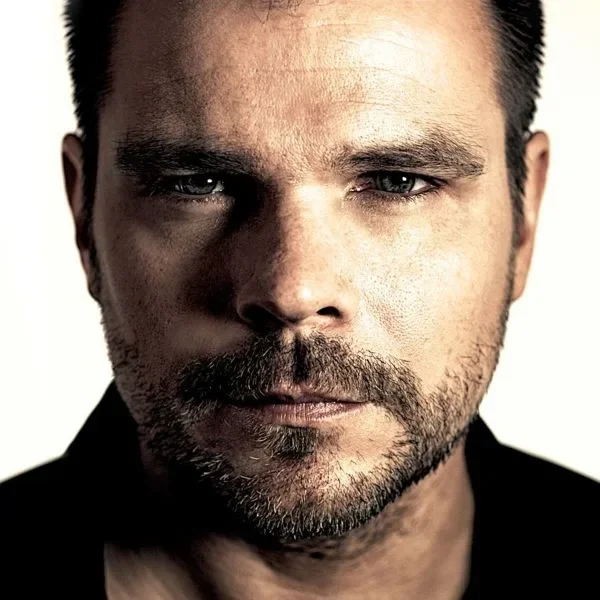 #2
#2Germany
1 editions · 2023
 #3
#3Austria
1 editions · 2023
If you like Campus Fesztivál, these have a similar lineup.