Ranking
#15

INDIE - POP - ROCK
Ranking
#15
Followers
7.3 M
When
2027
Featured artists
Lineup coming — we'll publish it as soon as it's confirmed.
42 editions to explore · future, live and past
 2027
2027Glastonbury 2027
Numbers, home base and house quirks
Glastonbury is not just a festival. It is a temporary village, a muddy legend, a city of music, politics, theatre, circus, faith, exhaustion, excess and community built on a working farm. It began in 1970 at Worthy Farm near Pilton, Somerset, when Michael Eavis decided to create his own festival after being inspired by a blues event in Bath. That first edition drew 1,500 people, cost £1 to enter and included free milk from the farm. Seen from today, with hundreds of thousands of people crossing its fields, that origin feels almost impossible: one of the most influential festivals in the world began as something rural, intimate and slightly homemade.
That is part of its magic. Glastonbury never fully lost the feeling that it happens in a real place. It is not a purpose-built entertainment park or a corporate field where everything disappears without a trace after the weekend. It is Worthy Farm: a dairy farm that, for a few days, trades cows for tents, mud tracks, stages, flags, food stalls, volunteers, families, activists, performers, impossible toilets, wellies and people walking around with the haunted expression of someone who already knows they will not see everything. Glastonbury is not simply attended. It is navigated, survived, misread, rediscovered and remembered in fragments.
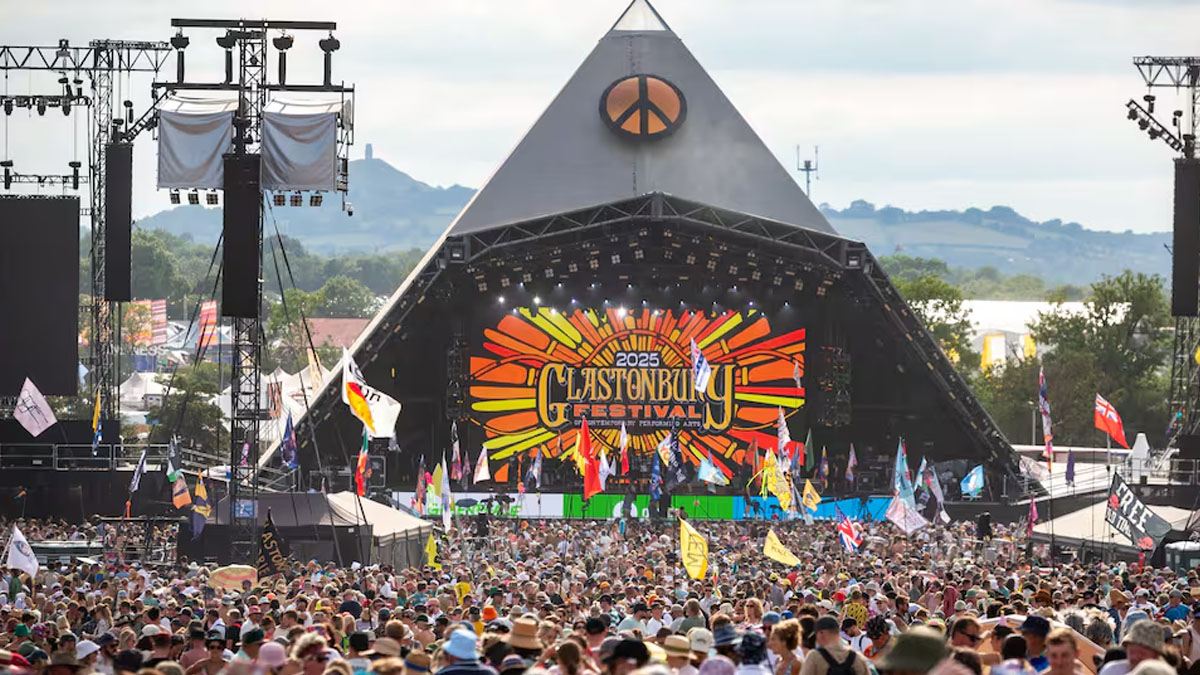
The first Pyramid Stage appeared in 1971 and eventually became one of the most recognizable symbols in festival culture. But reducing Glastonbury to that stage would miss the point. The Pyramid is the ceremonial center, the place of giant crowds, historic headline sets and images that travel around the world. Yet the festival’s real personality lies in its horizontal sprawl. There is music everywhere, but also theatre, comedy, circus, cabaret, debate, spoken word, political fields, healing spaces, late-night worlds and strange corners where you may end up watching something you never intended to see. Glastonbury rewards curiosity and gently punishes anyone who believes in a perfect timetable.
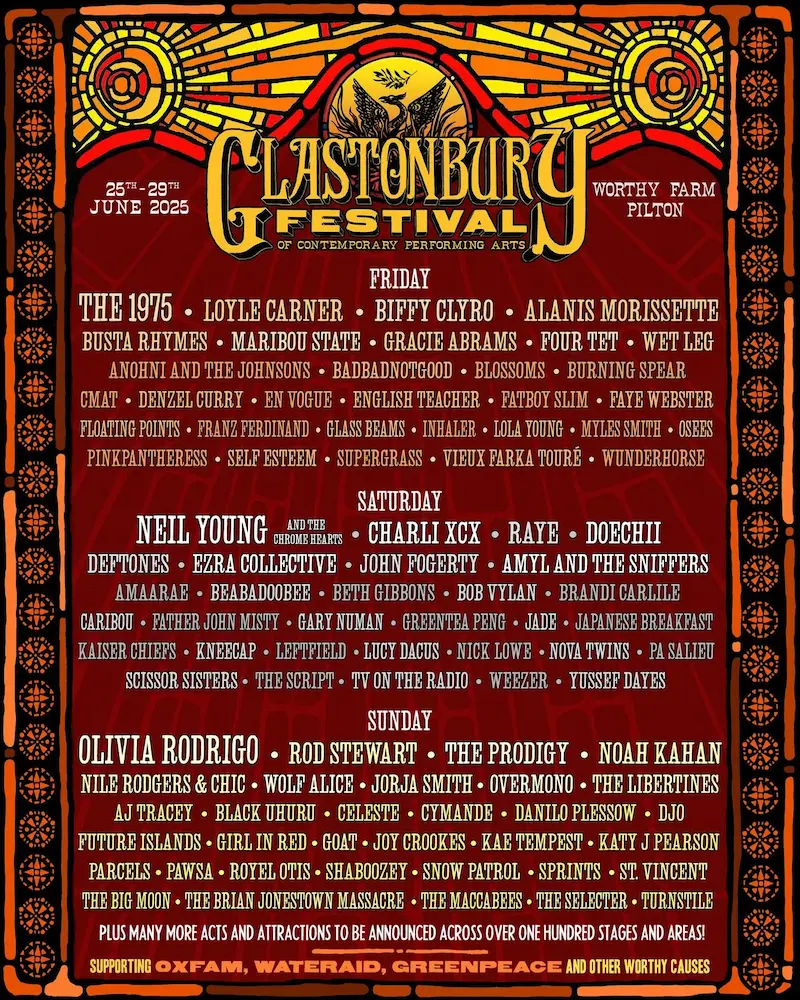
Musically, its identity is huge and restless. It has been rock, folk, electronic music, reggae, punk, pop, hip-hop, soul, jazz, global sounds, rave culture, indie, nostalgia and the future. It is not a genre festival. It is a living snapshot of British and international musical culture, with a rare ability to place legends, new artists, political performers, pop stars, cult bands and unknown discoveries on the same land. In 2025, the Pyramid Stage was topped by The 1975, Neil Young and The Chrome Hearts, and Olivia Rodrigo, with Rod Stewart in the Sunday legend slot. That combination says a lot: youth, memory, guitars, pop, history and communal singing all sharing the same mythology.
To attend Glastonbury is to accept permanent conflict. There is always an artist clashing with another artist. There is always a stage too far away. There is always possible mud, sudden heat, rain that turns paths into moral tests, and a friend who wants to go in the opposite direction. Someone wants the Other Stage, someone wants West Holts, someone has vanished into Shangri-La, and someone simply needs to sit down. The festival is made of wrong decisions that later become the best stories. You can miss a headliner and discover the set of your life in a smaller tent. You can plan three hours carefully and end up following a brass band, a strange procession or a bassline drifting from a field you did not know existed.
What makes Glastonbury different is that its spirit is not limited to entertainment. Since the early 1980s, when it became connected to the Campaign for Nuclear Disarmament, the festival has carried a strong relationship with social, environmental and humanitarian causes. Oxfam, Greenpeace and WaterAid are part of its moral architecture as much as its stages are part of its map. That does not make Glastonbury pure or perfect. It is massive, expensive, complicated and full of contradictions. But it still holds onto a powerful idea: music can coexist with conscience, protest, community and responsibility.
There is no Glastonbury in 2026 because the festival is taking a fallow year, giving the land and the organization time to breathe. That detail says a lot. Even myths need rest. It will return in 2027, and so will the ticket panic, the rumors, the boots, the endless walks, the strange dawns and the stories nobody fully believes until they have lived them. Glastonbury is not only about watching concerts. It is about entering an alternate version of the world where, for five days, music seems capable of rearranging life.
Genres
INDIE
POP
ROCK
Timeline
One artist per year — highest ranked in our archive
Those who appear most across this franchise's editions.
 #1
#1United States
1 editions · 2023
 #2
#2United States
1 editions · 2023
 #3
#3United States
1 editions · 2023
Editorial coverage linked by archive relation.