Ranking
#50

INDIE - METAL - ROCK
Ranking
#50
Followers
2 M
When
2027
Featured artists
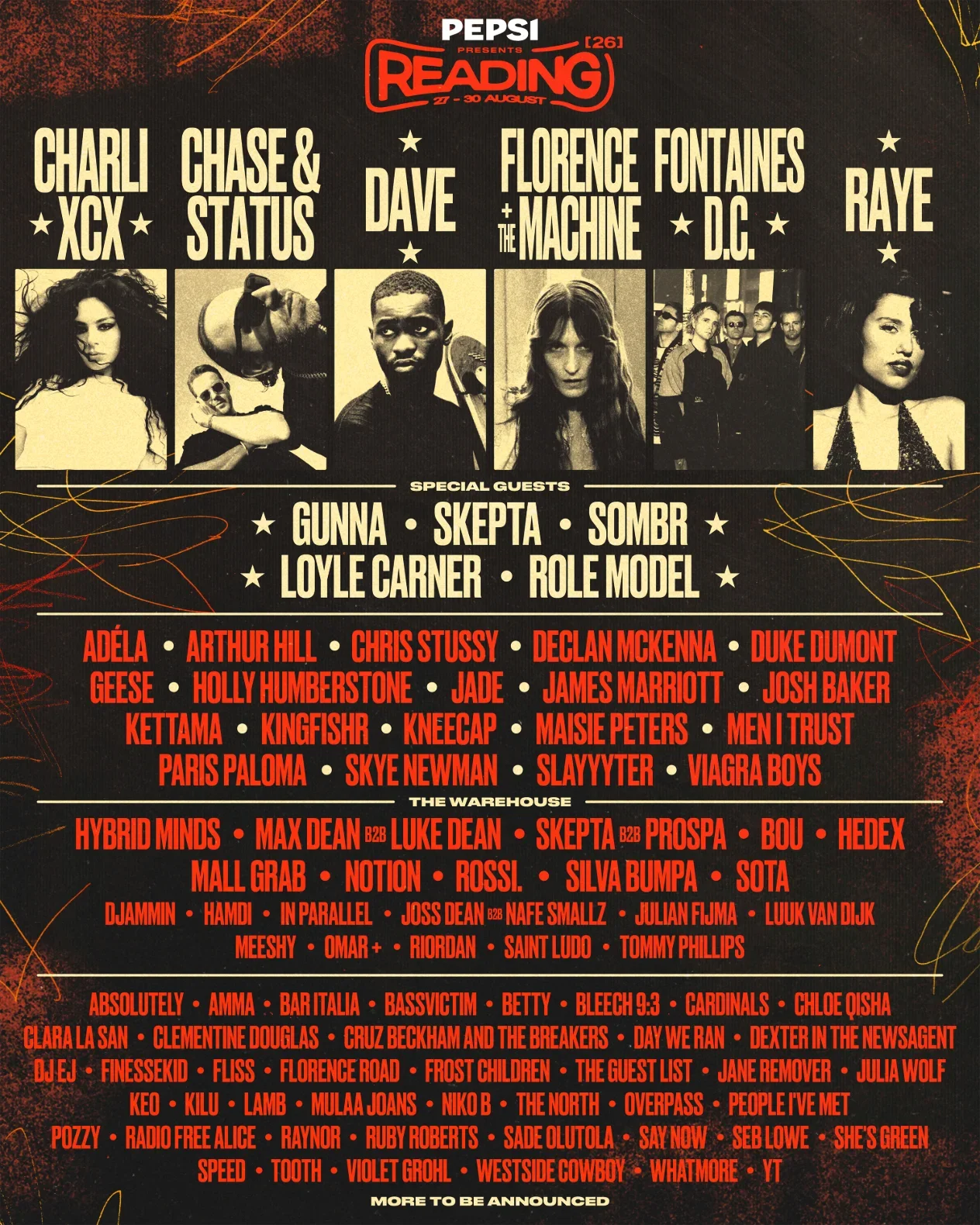
Lineup coming — we'll publish it as soon as it's confirmed.
20 editions to explore · future, live and past
Numbers, home base and house quirks
Reading Festival is one of the oldest and most resilient institutions in British popular music. Before becoming the youthful, noisy, muddy and multigenre festival that now shares its lineup with Leeds, it belonged to a much longer story: jazz, blues, rock, counterculture, site changes, tensions with local authorities and an evolution that reflects, almost decade by decade, how the musical youth of the United Kingdom has changed.
Its roots lie in the National Jazz Festival of 1961, but Reading as a town officially entered the story in 1971. That move was decisive. Richfield Avenue, by the River Thames, turned Reading into a place of musical pilgrimage. What began with jazz and blues heritage absorbed rock, hard rock, punk, metal, indie, grunge, britpop, emo, hip-hop, grime, pop, electronic music and drum and bass. Few festivals have changed so much while keeping the weight of their name.
During the 1970s and 1980s, Reading built a reputation tied to heavy rock, guitars, unpredictable weather and an intense crowd. It was not a polished or comfortable festival; that was part of its charm. Rain, mud, campsites and a slightly wild energy became part of the myth. Reading became a place where bands could be consecrated, where the crowd could be tough, where a show could feel historic or chaotic, and where the end of the British summer sounded like amplifiers, tents and happy exhaustion.
The arrival of Leeds in 1999 transformed the brand into Reading & Leeds, but Reading kept its role as the original site. Leeds added a northern and more rural dimension, while Reading remained the historic root, the place carrying the longest memory. Both festivals share a lineup, but they do not feel identical. Reading has a curious mix of tradition and youth: old by history, but every year full of teenagers and twenty-somethings experiencing it as if it had just begun.
Musically, Reading has survived because it never froze itself inside one era. Although its DNA is marked by alternative rock, guitars and band culture, the festival understood that young audiences no longer listen in sealed compartments. Today a pop headliner, a British rapper, a post-punk band, a drum and bass act, an indie star, an electronic producer and a viral artist can coexist on the same bill. That breadth sometimes sparks debate among purists, but it also explains the festival’s relevance.
Camping is central to the experience. Reading is not only about seeing concerts; it is about living for several days inside a temporary city. Tents, campsite lanes, unknown neighbors, walks toward the arena, cold nights, possible rain, queues, food stalls and accumulated exhaustion matter as much as some of the stages. For many people in the UK, Reading is a first major festival experience: a test of independence, friendship, chaos and music.
It is also a festival of generational memory. Someone who went in the 1990s remembers one thing; someone from the 2000s remembers another; someone attending now may associate it with pop, rap, electronic music and new British scenes. That ability to belong to many generations is rare. Reading is not a rock museum, even though it has more than enough history to become one. It is a festival that keeps arguing with the present.
Genres
INDIE
METAL
ROCK
Timeline
One artist per year — highest ranked in our archive
Those who appear most across this franchise's editions.
 #1
#1United Kingdom
2 editions · 2023–2026
 #2
#2United Kingdom
2 editions · 2023–2026
 #3
#3United Kingdom
2 editions · 2023–2026