Ranking
#1,247

ALTERNATIVE ROCK - INDIE ROCK - ART ROCK
Ranking
#1,247
When
2027
Featured artists
Lineup coming — we'll publish it as soon as it's confirmed.
6 editions to explore · future, live and past
Numbers, home base and house quirks
Eaux Claires has always worked best when somebody does something that could not be reproduced exactly the same way the following weekend. One artist joins another’s set, composers work across scenes, a band reconstructs an album, or Justin Vernon decides to interpret Bob Dylan with an ensemble assembled specifically for one night. That appetite for turning a festival into a laboratory has distinguished Eaux Claires since it began in Wisconsin in 2015. The names on the poster matter, but its more characteristic question is what those musicians might create together once they all arrive in Eau Claire.
Justin Vernon, who grew up in the area and built much of Bon Iver’s world there, founded the festival with The National’s Aaron Dessner. Both had spent years touring major festivals and wanted to react against habits they disliked: constant volume, days organised almost entirely around headliners and events that had little relationship with the places hosting them. The inaugural edition at Foster Farms in July 2015 brought Bon Iver, The National, Sufjan Stevens, Spoon, Sturgill Simpson, Sylvan Esso, Charles Bradley, Indigo Girls, Lizzo, Doomtree and many others into a programme where visual art, performance and installation were treated as part of the same environment.
Foster Farms gave those early years a physical identity. The rural property near the Chippewa River allowed audiences to move between stages, artworks and less predictable spaces, while the schedule created room for artists to overlap creatively rather than simply competing for attention. In 2016, Bruce Hornsby performed The Way It Is, Cornelius presented Fantasma, and Aaron and Bryce Dessner assembled the expansive Day of the Dead project around the Grateful Dead songbook. Erykah Badu, James Blake, Beach House, Vince Staples, Mavis Staples, Jon Hopkins and Bon Iver could coexist because curiosity mattered more than a narrow genre definition.
The idea reached an especially clear form in 2017. Bon Iver presented John Prine and the American Songbook with Prine himself; Paul Simon performed with yMusic; Wilco, Chance the Rapper, Feist, Perfume Genius, Julieta Venegas and Sylvan Esso shared a weekend in which recurring artists could appear in other people’s performances. Big Red Machine, Justin Vernon and Aaron Dessner’s collaboration, also surfaced in this period. The boundary between “my set” and “your set” was intentionally porous. Some of the most memorable music therefore could not be predicted by looking at a standard festival grid weeks in advance.
Eaux Claires IV in 2018 pushed that philosophy close to provocation. Organisers refused to publish a conventional lineup before the event. Instead, ticket holders received audio clues, fragments, collages, conversations and hints about artists who might participate. The proper schedule effectively materialised as the festival began. The National, Big Red Machine, Julien Baker, Sharon Van Etten, Phoebe Bridgers, Moses Sumney, Pussy Riot and Mouse on Mars were among the eventual performers. Some people found the uncertainty frustrating, but the experiment was a deliberate question: how much trust could an audience place in the festival itself rather than in advance knowledge of specific headliners?
After four consecutive summers, the founders stopped. There was no main festival in 2019 because the team wanted to rethink scale, philosophy and the event’s relationship with Eau Claire itself. That November brought Eaux Claires Hiver, a much smaller winter residency focused on improvisation and works in progress with Vernon, Dessner, Jon Hopkins, Ani DiFranco, S. Carey, Poliça and others. Hiver was intended to feed into Eaux Claires V in 2020. The fifth summer event never happened. The pandemic erased those plans, and the silence afterward stretched a designed hiatus into an eight-year absence.
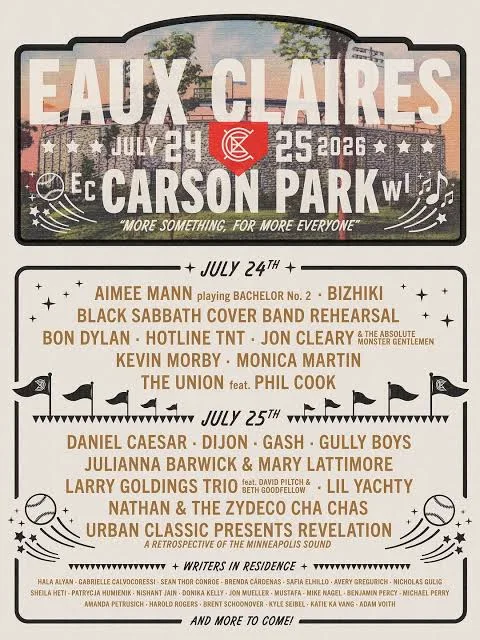
The July 2026 revival changed the geography as well. Eaux Claires left Foster Farms for Carson Park, within walking distance of downtown Eau Claire. Attendance was deliberately tighter—roughly 7,500 people on Friday—but the town became much more visible. Local businesses, pre-festival events, Upper Midwest food and a new Writers in Residence programme made the weekend feel less like a temporary village installed beside Eau Claire and more like an extension of the city. Even Carson Park’s historic baseball stadium became part of the creative language of the return.
The lineup changed substantially before gates opened. Lil Yachty, Daniel Caesar and Kevin Morby ultimately withdrew, but Eaux Claires responded in characteristically fluid fashion. Samia joined the programme; Aaron Dessner performed with Fred again..; Justin Vernon appeared unexpectedly and later closed Friday as Bon Dylan, transforming Bob Dylan material with a large ensemble. Aimee Mann performed Bachelor No. 2, while Dijon, Julianna Barwick & Mary Lattimore, Gully Boys, Monica Martin, Hotline TNT, Larry Goldings Trio and regional musicians shaped the rest of the weekend.
There is no confirmed 2027 edition yet, but 2026 demonstrated that Eaux Claires had genuinely returned rather than staging a one-night nostalgia exercise. The festival is now smaller, more urban and even less interested in competing for the largest collection of names. Its future depends on preserving precisely the qualities that made it difficult to imitate in the first place: musicians with enough time and permission to experiment, a hometown treated as part of the programme, and an audience willing to accept that some of the best performances may be the ones nobody could announce accurately in advance.
Genres
alternative rock
indie rock
art rock
Timeline
One artist per year — highest ranked in our archive
Those who appear most across this franchise's editions.
 #1
#1United States
1 editions · 2026
 #2
#2Canada
1 editions · 2026
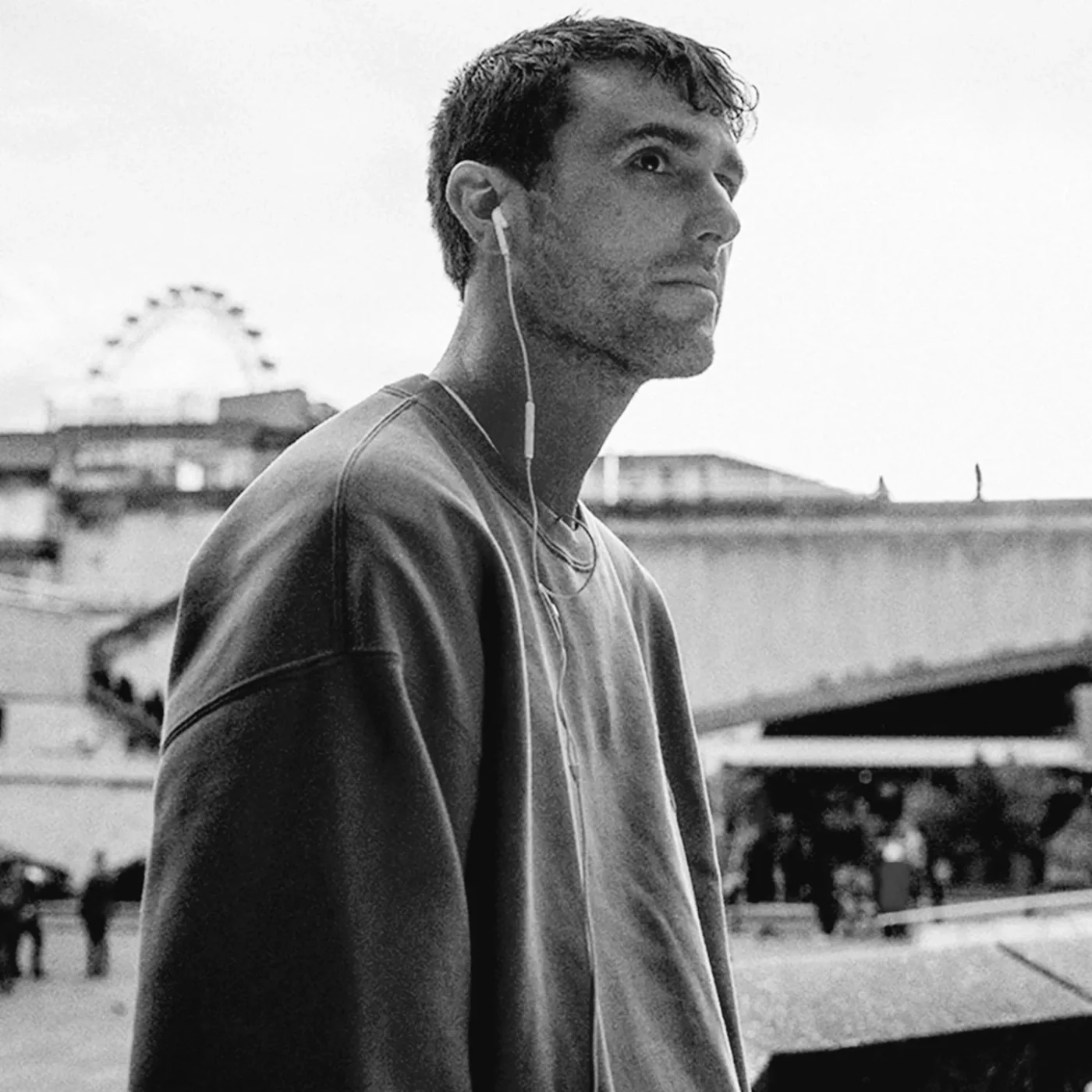 #3
#3United Kingdom
1 editions · 2026