Ranking
#1,247

INDIE - METAL - ROCK
Ranking
#1,247
When
2027
Featured artists
Lineup coming — we'll publish it as soon as it's confirmed.
5 editions to explore · future, live and past
Numbers, home base and house quirks
At dusk the Rowing Canal in Plovdiv stops looking like sports infrastructure and becomes an amphitheatre: low hills, wide sky over the Balkans and a collective roar running through the Bulgarian summer. Hills of Rock was not born in a disused airport or a generic meadow; it grew in one of South-Eastern Europe's most distinctive urban landscapes, where still water reflects stage lights and crowds move between terraces, grass and tents as if metal had earned citizenship in one of the continent's oldest cities.
The project launched in 2017 within the Plovdiv 2019 — European Capital of Culture — framework, aiming to place Bulgaria on the international rock and metal touring map. Fest Team, led by Stefan Elenkov, built a multi-day format with three stages mixing global legends, rising Balkan acts and local bands without treating them as decorative openers. The first edition brought Epica, Evanescence, Three Days Grace and Guano Apes alongside Bulgarian names — Control, PIF, Review, Medikus — as a statement of intent: international scale with regional roots.
Festival architecture spreads experience across lanes that allow overlaps without drowning the visitor. A main stage concentrates stadium headliners; other areas host extreme metal, alternative rock and closer-to-underground proposals. More than one hundred and fifty foreign and Bulgarian acts have played the canal since the beginning, according to the project's own figures — a count explaining why Hills of Rock reads as ecosystem rather than isolated calendar date in the Balkans.
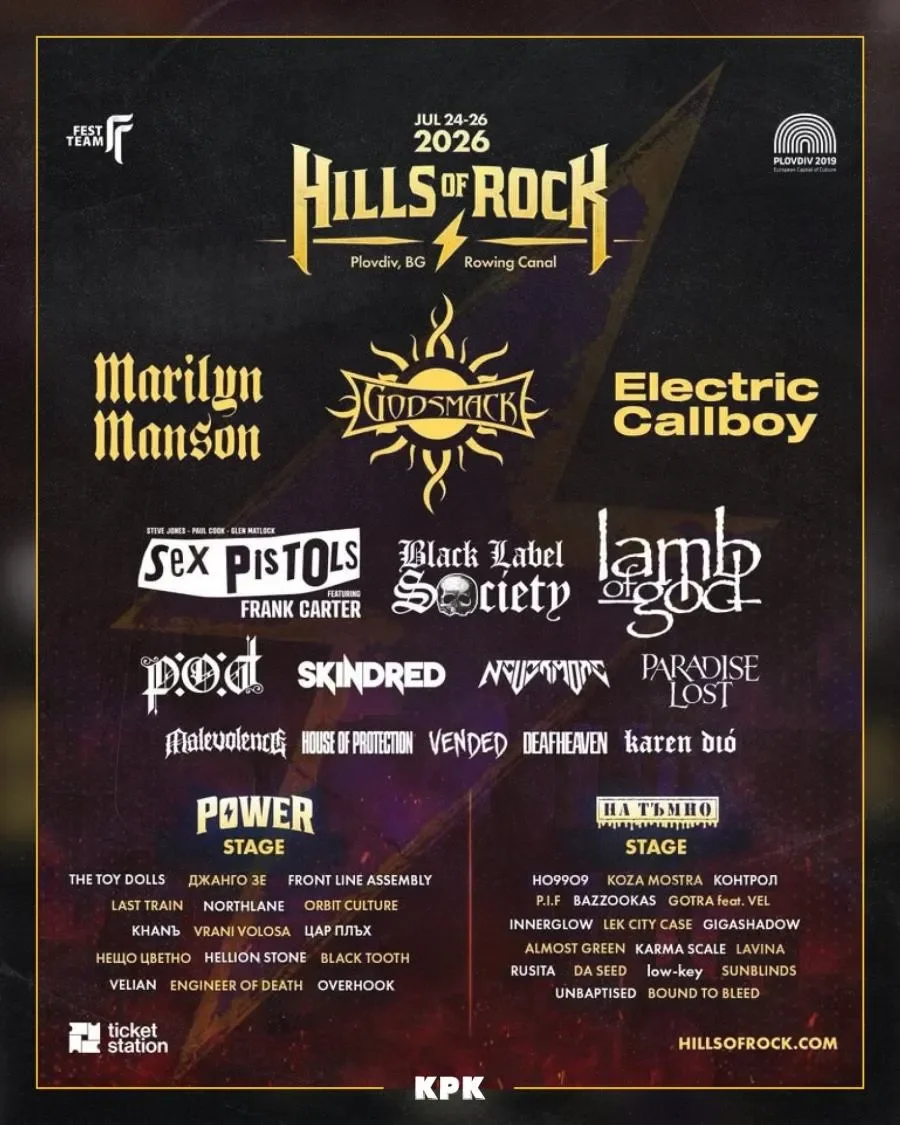
Bills illustrate evolution without turning into lists: Judas Priest, Iron Maiden, Whitesnake, Disturbed, Sabaton, Garbage, Slipknot, Mercyful Fate, Behemoth, Heaven Shall Burn, Marilyn Manson or Sex Pistols represent different generations of heavy rock and modern metal. Each name tells a booking story connecting Plovdiv with European tours that once skipped Bulgaria. For local crowds, seeing those bands beside the canal is more than a concert: proof the scene need not mentally emigrate to Sofia or abroad to feel at the map's centre.
Over time the festival added format layers reinforcing identity. Be4 Hills — a preliminary opening day — extended the experience toward symphonic and European power metal with figures like Sabaton, Epica or Savatage, bridging eve and core weekend. That extra layer does not dilute the brand: it amplifies it, offering an additional day for travellers who want to maximise the journey.
Canal logistics shape experience in ways enclosed sites cannot replicate. Summer heat, sun on water, distances between stages and the mix of local and international audiences define an atmosphere chronicles often describe as intense yet familiar. Many visitors arrive from Romania, Greece, Turkey and across the Balkans, turning the canal into a regional hub where languages blend at beer stands and merchandise queues. Camping or returning to Plovdiv's historic centre — old town, Roman theatre ruins and nightlife — belongs to the ritual: the festival does not isolate the city; it incorporates it as cultural extension of the weekend, with restaurants and hotels benefiting from the influx.
Hills of Rock grew into Bulgaria's largest rock and metal event, cited in international specialist media when editions coincided with other major European festivals. The forced pandemic pause fits the story of an entire sector, not an isolated exception; the subsequent return confirmed demand remained alive. Stefan Elenkov and his booking team — with figures like Krasi Moskow in curation — kept betting on balancing days across the bill, avoiding concentrating all weight on a single date.
For promoters and audiences, the interesting contradiction is scale: a festival competing with global names while keeping an identity-bound venue and explicit link to Plovdiv's cultural capital status. It does not try to look like Wacken or Download; it aims to be the Balkan date where the rowing canal, hills and Bulgarian summer are inseparable from the sonic contract. That geography — water, gentle slope, open sky — explains why the festival image is recognisable even to those who never set foot in Bulgaria.
Between the 2017 cultural project and the tens of thousands who made the canal their annual meeting point, Hills of Rock proved international metal can anchor in South-Eastern Europe without losing local authenticity. Fest Team turned sports infrastructure into symbol: not because water joins the performance, but because landscape frames volume, community and collective memory of a country that found in heavy rock a way to speak to the world.
Premium zones such as Above the Crowd, VIP and backstage areas — added as the festival matured — illustrate how a Balkan event can grow commercially without surrendering its core identity. Early-bird and blind-sale ticket campaigns built a loyal fan base willing to commit before lineups drop, a model that strengthened trust between promoter and audience across years of programming at the Rowing Canal.
Genres
INDIE
METAL
ROCK
Timeline
One artist per year — highest ranked in our archive
Those who appear most across this franchise's editions.
 #1
#1United States
1 editions · 2026
 #2
#2United States
1 editions · 2026
 #3
#31 editions · 2026