Ranking
#40

HIP HOP - INDIE - ROCK
Ranking
#40
Followers
2.3 M
When
15–MAR 21, 2027
Where
Austin, Texas
Country
United States
Featured artists
Lineup coming — we'll publish it as soon as it's confirmed.
Time left
10 editions to explore · future, live and past
Numbers, home base and house quirks
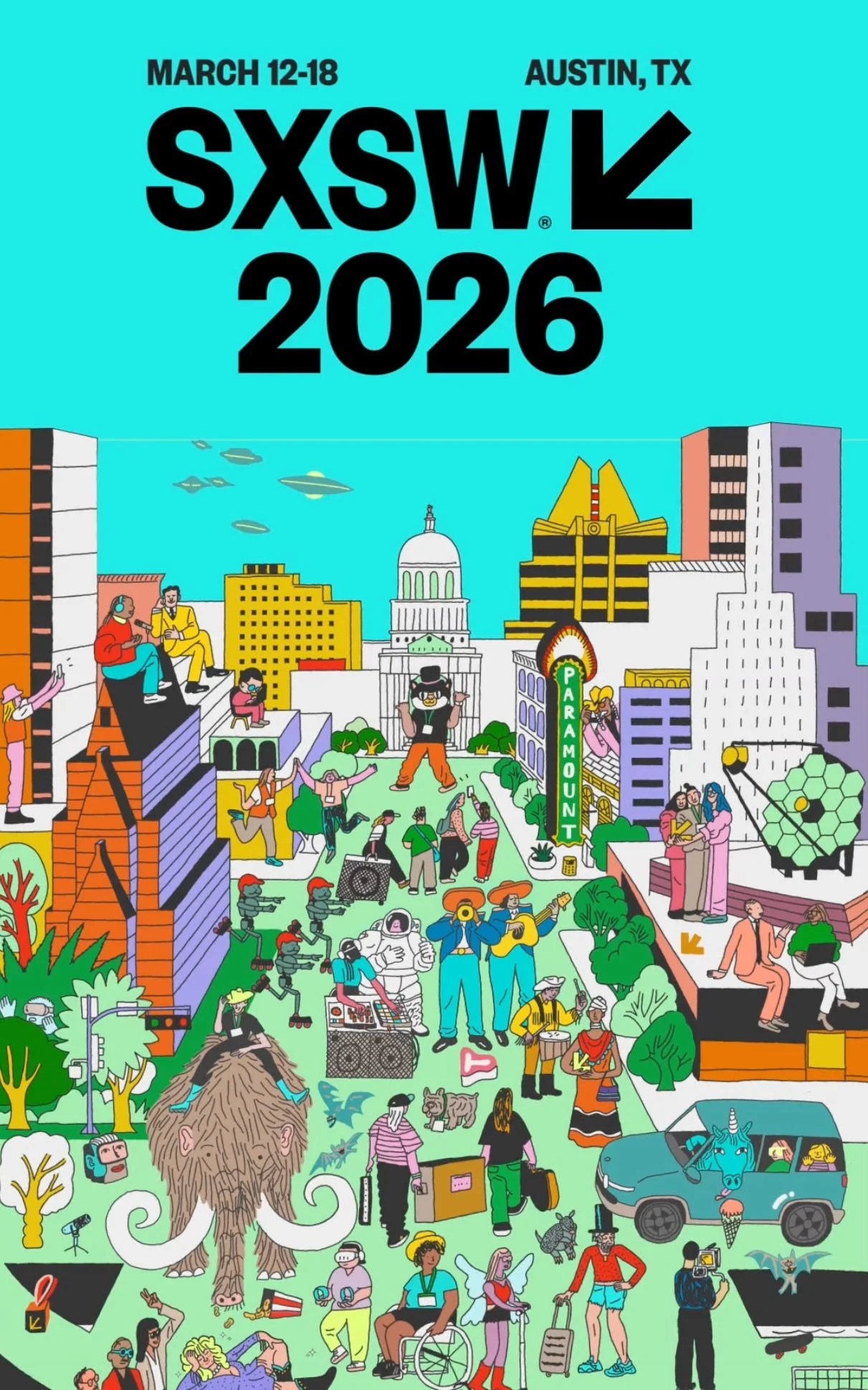
South by Southwest, better known as SXSW, is one of those events that broke the traditional definition of a festival. It is not only music, not only film, not only technology, not only conferences. It is an entire city turned into a cultural laboratory. For several days in March, Austin stops functioning like a normal city and becomes a crossroads where emerging musicians, filmmakers, technology executives, journalists, comedians, brands, investors, designers, activists, gamers, content creators, publicists, startups and curious visitors end up sharing sidewalks, rooms, bars, theaters and unlikely conversations.
Its origin in 1987 was far more modest. SXSW began in Austin as an attempt to connect the local music scene with a wider network of industry, press and discovery. The idea was to use Austin’s character: a musical, university-driven, weird, creative city, less rigid than the major entertainment centers of the United States. What began with small expectations grew quickly because it found a powerful formula: bringing creative people together before the world knew exactly what would happen with them.
That is the heart of SXSW: the feeling of discovery. Unlike a festival built only around major headliners, SXSW has always carried something of an unfinished map. You can walk into a small venue without knowing anyone on the bill and leave convinced you have just seen the next important band. You can hear a talk about a technology that still seems marginal and years later realize that a cultural transformation was being anticipated there. You can watch an independent film before it becomes part of a global conversation, or sit in a session where an industry begins to name something that has not yet fully taken shape.
In music, SXSW works as a showcase festival. That makes it different from Coachella, Glastonbury or Lollapalooza. Here, the glamour is not only on the big stage, but in the multiplication of places: bars, clubs, small rooms, patios, churches, rooftops, brand activations and temporary spaces. The experience can be exhausting, chaotic and wonderful. It is not only about watching concerts; it is about running between schedules, discovering scenes, networking, getting lost, entering an unexpected showcase and feeling that the whole city of Austin has been programmed like a living playlist.
The film and television component added another layer. SXSW became an important place for premieres, independent cinema, documentaries, strange projects, digital narratives and conversations between creators and audiences. It does not have the solemnity of Cannes or the classic industry weight of Sundance, although it speaks to both worlds. Its personality is more hybrid, faster, closer to pop culture and immediate conversation. A film can premiere there and leave with cult momentum; a series can find an audience; a documentary can connect with social debates already circulating through technology, politics or music.
The interactive and innovation side turned SXSW into a thermometer for the future. Social networks, startups, artificial intelligence, digital platforms, marketing, video games, media, extended reality, design, internet culture and new forms of work have all passed through its stages and corridors. SXSW does not always predict the future perfectly, but it does show which obsessions are beginning to take shape. What makes it interesting is that those ideas do not live in isolation: they coexist with bands playing at midnight, comedians testing material, directors presenting films and brands trying to capture attention in a city overloaded with stimuli.
The pandemic marked a hard blow. The 2020 cancellation broke a historical continuity and showed the fragility of an event so dependent on physical presence, industry travel and spontaneous encounter. The 2021 online edition was a necessary response, but SXSW belongs deeply to Austin. Its true energy happens when the city fills up, when conversations move from a conference to a taco line, from a showcase to a lobby, from a premiere to an improvised party.
SXSW should be understood as a special category: festival, conference, market, showcase, laboratory and urban ritual at the same time. Its importance lies not only in the artists it programs, but in the way it mixes industries. SXSW matters because it shows how contemporary culture is born: not in separate compartments, but in messy crossings between music, film, technology, business, politics, comedy, design and the street. It is the festival where what comes next does not yet feel inevitable, but is already starting to make noise.
Genres
HIP HOP
INDIE
ROCK
Timeline
One artist per year — highest ranked in our archive
Those who appear most across this franchise's editions.
 #1
#1Canada
2 editions · 2023–2026
 #2
#2United States
2 editions · 2023–2026
 #3
#3United States
2 editions · 2023–2026