Ranking
#38

HOUSE - TECHNO - TRANCE
Ranking
#38
Followers
2.5 M
1 editions to explore · future, live and past
 2023
2023Ultra Brasil 2023
Numbers, home base and house quirks
Ultra Brasil is one of the most interesting branches of Ultra Worldwide because its history has not been linear: it appeared, changed cities, stopped, exploded again in Rio de Janeiro, paused for years and returned in São Paulo. It does not have the annual continuity of Ultra Miami or the recent stability of Ultra Europe, but that is exactly what makes it fascinating for a historical festival database. It is a global brand trying to speak with one of the most intense, musical and complex countries in the world.
Brazil did not need Ultra to discover electronic music. São Paulo, Rio de Janeiro, Belo Horizonte and other cities already had strong club, techno, house, psytrance, trance, bass, festival, open-air and DJ cultures. What Ultra brought was something different: an international platform, a global festival aesthetic, the Miami seal, large-scale production and a recognizable combination of mainstage EDM with the more club-oriented side of RESISTANCE. Ultra Brasil worked as a bridge between the Brazilian circuit and Ultra’s worldwide narrative.
Ultra’s Brazilian background goes back to 2008, with events in São Paulo and Belo Horizonte, followed by São Paulo editions in 2010 and 2011. That first stage helped insert the brand into a country that already responded strongly to electronic music. But the chapter that most fixed Ultra Brasil in recent festival memory was the 2016 return in Rio de Janeiro. The Sambódromo, an absolute symbol of Rio Carnival, temporarily changed its skin: it stopped being an avenue of samba and became a corridor of lights, bass, screens, techno, EDM and electronic crowds.
That venue choice was powerful. The Sambódromo is not neutral ground. It is loaded with Brazilian culture, parade, body, rhythm, competition, popular spectacle and urban memory. Bringing Ultra there meant placing a global electronic brand inside a deeply Carioca space. The image was irresistible: the same place where Carnival turns Rio into a theater of the world, now occupied by international DJs, electronic scenography and a crowd that came to dance in a different way, but with the same physical intensity that defines Brazil.
The 2016 edition brought an ambitious lineup with artists such as Martin Garrix, Carl Cox, Above & Beyond, Hardwell, DJ Snake, Dash Berlin, Steve Aoki, Krewella, Nic Fanciulli, ANNA, Hot Since 82, Matador, JAUZ, Infected Mushroom, Markus Schulz and others. That mix summarized the Ultra spirit well: giant names for the mainstage, trance and EDM for hands-in-the-air emotion, and a RESISTANCE line focused on deeper techno and house. Ultra Brasil did not want to be only a massive party; it wanted to present itself as a full part of the Ultra universe.
In 2017, the festival expanded to three days, again at the Sambódromo. The presence of Armin van Buuren, David Guetta, Alesso, Adam Beyer, Jamie Jones, Joseph Capriati, The Martinez Brothers and Sasha & John Digweed reinforced that double identity: global spectacle and club culture. For South America, having a three-day Ultra edition in Rio was a strong signal. Brazil was not just another market; it was a territory capable of receiving a large, ambitious and visually powerful version of the brand.
After that, the story became more irregular. Ultra Brasil did not consolidate into a stable annual sequence and remained on pause until its return in 2023, this time in São Paulo at Vale do Anhangabaú. That change also carries symbolic meaning. If Rio offered Carnival, emotional landscape and the Sambódromo, São Paulo offered urban density, cultural-financial center, club scene, concrete, movement and a strong relationship with contemporary electronic music. Ultra Brasil moved from Carioca theatricality to Paulista metropolitan energy.
Its value lies in its intermittent trajectory, the force of its moments and its ability to appear as a major event whenever the brand decides to return.
Ultra Brasil matters because it shows how a global franchise can adapt to two different Brazilian souls: Rio, with its monumental carnival energy, and São Paulo, with its urban intensity. At its best, it is Ultra passed through the Brazilian body: hotter, more physical, more chaotic, more emotional and always carrying the feeling that when Brazil dances, any international brand stops feeling foreign for a few hours.
Genres
HOUSE
TECHNO
TRANCE
Timeline
One artist per year — highest ranked in our archive
Those who appear most across this franchise's editions.
 #1
#1United States
1 editions · 2023
 #2
#2United Kingdom
1 editions · 2023
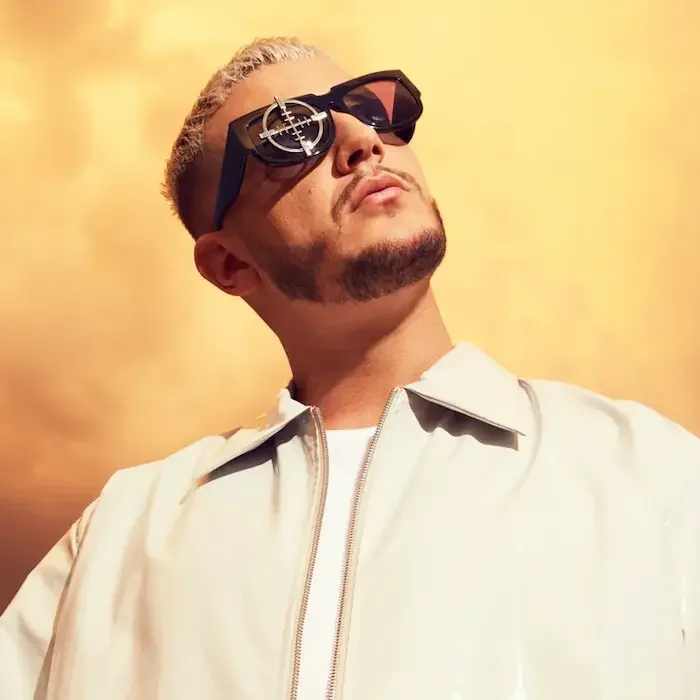 #3
#3France
1 editions · 2023