Ranking
#1,247

INDIE - ROCK
Ranking
#1,247
When
2027
Featured artists
Lineup coming — we'll publish it as soon as it's confirmed.
4 editions to explore · future, live and past
Numbers, home base and house quirks
Arsenal Fest is one of those European festivals that would lose much of its identity if it were removed from its site. Held in Kragujevac, in the heart of Serbia’s Šumadija region, it takes place inside the historic Knežev Arsenal complex, an industrial setting that feels almost built for guitars, electronic bass, crowd noise and late-night festival light. Launched in 2011, the festival has grown into one of Serbia’s most distinctive music events, bringing together international artists, Balkan acts, Serbian rock, electronic music, metal, punk, alternative pop and the wider musical memory of the former Yugoslav region.
The first thing that sets Arsenal Fest apart is the venue. Knežev Arsenal is not a neutral modern event space or a polished greenfield site. It carries the weight of Kragujevac’s industrial past, a history connected to factories, cars, weapons, labour and production. That texture matters. The festival’s atmosphere does not feel artificially designed to look alternative. It comes from real walls, courtyards, old structures and a setting that naturally suits heavy rock, electronic pressure, punk attitude and large open-air crowds. At Arsenal Fest, the location is not just a backdrop. It is part of the performance.
Its three-day format allows the festival to move through several moods. The Main Stage carries the biggest moments, international names and artists with the power to gather broad crowds. The Garden Stage offers a different pace, often more intimate, greener and well suited to regional acts, alternative discoveries and artists with a more local or scene-based following. The Explosive Stage pushes toward the electronic, club-driven and physically intense side of the festival. Together, these stages give Arsenal Fest its flexibility. It can move from Balkan rock history to British electronic music, from extreme metal to regional pop, from punk to techno, without losing its center.
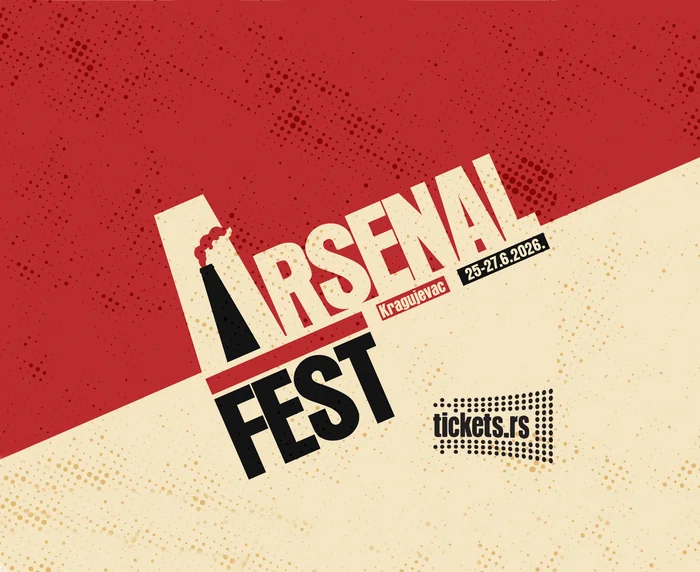
Recent line-ups show that breadth clearly. In 2025, Arsenal Fest marked its 15th anniversary with Massive Attack, Faithless, The Hu, La Femme, Joker Out, Bajaga i Instruktori and other names that signaled a serious international reach while still keeping a strong regional base. In 2026, the programme included The Cardigans, Underworld, Paradise Lost, Sonata Arctica, Napalm Death, Cockney Rejects, Destruction, Partibrejkers, Konstrakta, S.A.R.S., Goran Bare & Majke, Timo Maas, Tom Novy, Petar Dundov, Negative, Magnifico, Repetitor, Silente and many others. That combination says a lot about the festival. Arsenal Fest is not built for one audience only. It is built for overlap: generations, subcultures, languages and different memories of what live music can mean in the Balkans.
There is something strongly regional in its energy. Arsenal Fest can place ex-YU nostalgia, Serbian rock, Balkan pop, metal, electronic music, punk, younger acts and cult names inside the same weekend. For international visitors, that makes it a useful entry point into Serbian and Balkan music beyond the obvious tourist images. For local and regional audiences, it can feel like an annual point of return: a festival that does not merely book artists, but gathers a piece of the city’s and region’s cultural life in one industrial space.
The physical experience has its own rhythm. Kragujevac is not Belgrade and it is not Novi Sad, which gives Arsenal Fest a different scale. Attending the festival does not feel like entering an enormous global machine. It feels like arriving in a city that concentrates itself around one event. During the day, people move between accommodation, streets, cafés, food, the camp in Veliki Park and the festival grounds. As evening approaches, Knežev Arsenal changes temperature. Lights hit the old industrial walls, the stages begin to fill, internal routes become crowded and the festival gathers force into the night. The city and the venue remain close enough that the experience feels connected rather than isolated.
Camping adds another layer for those who want the full three-day immersion. It does not turn Arsenal Fest into a rural escape, because the festival’s essence remains urban and industrial, but it does allow visitors to settle into a temporary community. That mix—city, camp, industrial heritage and musical variety—is one of the event’s strengths. Arsenal Fest does not depend only on who is playing. It depends on how those artists occupy the space.
Its recognition beyond Serbia also matters. Membership in YOUROPE and its shortlisting as a European Best Small Festival helped place Arsenal Fest on the wider European map, but without making it feel detached from Kragujevac. The fact that it has been declared an event of public importance for the city and received the Đurđevdan Award for cultural contribution reinforces what the festival already communicates through experience: Arsenal Fest is not just a summer visitor. It has become part of Kragujevac’s contemporary cultural identity.
Arsenal Fest works because it brings together things that do not always sit comfortably side by side: industrial heritage, urban memory, regional stars, international touring acts, Balkan rock history, electronic music, metal, alternative pop and a city that feels ownership of the event. Its appeal does not come from trying to imitate Europe’s largest festivals. It comes from sounding like a specific place. Arsenal Fest is a festival of old walls and present sound, factory history and late-night energy, Kragujevac looking outward while still recognising itself.
Genres
INDIE
ROCK
Timeline
One artist per year — highest ranked in our archive
Those who appear most across this franchise's editions.
 #1
#1United Kingdom
1 editions · 2026
 #2
#2United Kingdom
1 editions · 2026
 #3
#3United Kingdom
1 editions · 2026