Ranking
#44

HIP HOP - POP - ROCK
Ranking
#44
Followers
2.2 M

When
12–MAR 14, 2027
Featured artists
Lineup coming — we'll publish it as soon as it's confirmed.
Time left
12 editions to explore · future, live and past
 2027
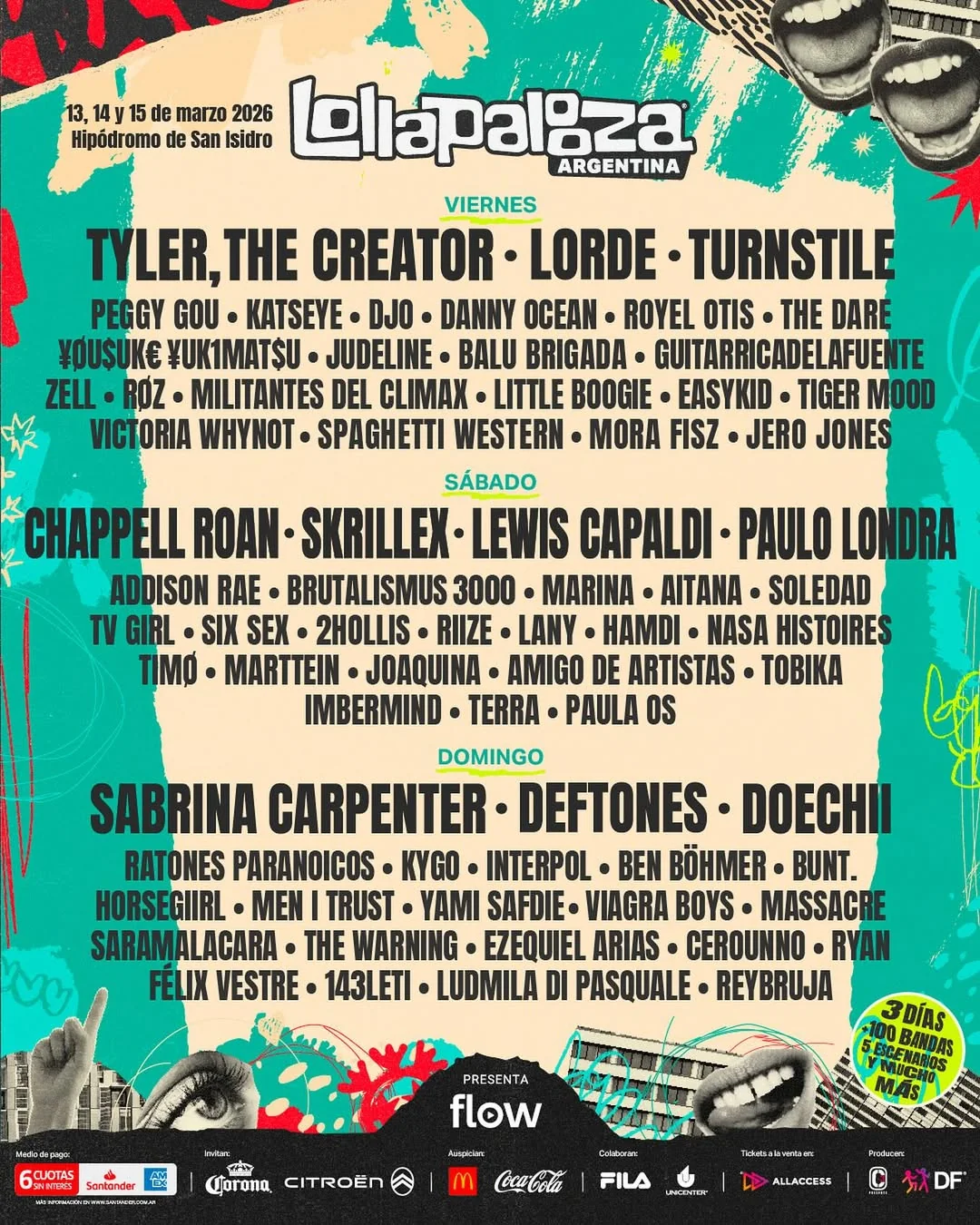
2027Lollapalooza Argentina 2027
Numbers, home base and house quirks
Lollapalooza Argentina is one of the strongest Latin American adaptations of the Lollapalooza franchise, but over time it stopped feeling like a simple imported copy. Since its arrival in 2014 at the Hipódromo de San Isidro, the festival found a very Argentine way of living the global format: a mixture of rock, pop, electronic music, trap, indie, nostalgia, fashion, food, families, intense fans and a local scene always trying to make its way among the biggest international names.
The first edition already arrived with weight. Arcade Fire, Red Hot Chili Peppers, Nine Inch Nails, Soundgarden, Pixies, Phoenix, Vampire Weekend, New Order, Lorde, Kid Cudi, Zedd, Flume and several local artists made the debut feel less like a timid test and more like a statement of intent. Argentina entered the Lollapalooza circuit with an audience used to experiencing music with almost football-like passion: singing loudly, arriving early, carrying flags, debating lineups, defending national artists and turning every closing set into a moment of mass communion.
The Hipódromo de San Isidro is essential to that identity. It is not in the center of Buenos Aires, but it belongs to the imagination of the northern area of Greater Buenos Aires and works as a huge green territory that is completely transformed for three days. There, grass, trees, long walks, stages, food areas, entrances, wristbands, merchandise and lines create a temporary city. Lollapalooza Argentina is not experienced only as a sequence of concerts, but as a full weekend where the audience enters festival mode even before crossing the gate.
Musically, its great strength is breadth. Lollapalooza Argentina can bring together alternative rock, global pop, hip-hop, Argentine trap, electronic music, techno, EDM, punk, alternative metal, R&B, Latin indie, urban music, modern folklore, cumbia and emerging names on the same bill. That mix may seem chaotic, but it perfectly reflects a generation that listens to music without asking permission from genres. The same group of friends can come for a pop headliner, a DJ at Perry’s, a guitar band, a local trap artist and a nostalgic nineties act. That coexistence is part of the magic and also part of the annual conversation around the festival.
The Argentine scene has a special place. Lollapalooza always brings major international names, but the local audience does not arrive only to look outward. It also celebrates its own artists. The presence of Argentine figures from rock, pop, trap, indie, urban and alternative music allows the festival to function as a national showcase. For many local musicians, playing Lolla means entering another scale: big stages, mixed audiences, media coverage, young crowds and the chance to connect with people who might not have bought a ticket to see them alone.
Another important point is its family and generational character. Kidzapalooza, Lolla Food, Espíritu Verde, rest areas, activities and brand spaces have made the festival more than a youth party. Teenagers experience it as a rite of passage, adults go for nostalgia or curiosity, families bring children to their first musical experiences and loyal fans return year after year. That mixture gives the event a different texture: it can be euphoric, massive and exhausting, but also daytime, family-friendly, gastronomic and cultural.
The pandemic interrupted its continuity, as it did with so many festivals, but the return confirmed the emotional bond with the audience. After the pause, Lollapalooza Argentina came back at massive scale and consolidated itself as a fixed date on the Argentine music calendar. The tenth-anniversary edition in 2025 reinforced that feeling of recent tradition: it was no longer a new event trying to convince the public, but a brand already installed in collective memory.
Lollapalooza Argentina matters because it translated a global franchise into a local pulse. It keeps the Lolla DNA — multigenre, urban, family-oriented, visual, international — but runs it through Argentine intensity: shouting, anticipation, debate, loyalty, local pride and a way of experiencing music as if every show could become a generational memory. In San Isidro, Lolla is not only a festival arriving from outside; it is an Argentine March ritual.
Genres
HIP HOP
POP
ROCK
Timeline
One artist per year — highest ranked in our archive
Those who appear most across this franchise's editions.
 #1
#1Venezuela
2 editions · 2023–2026
#2Spain
2 editions · 2023–2026
 #3
#3Spain
2 editions · 2023–2026