



Ranking
#724

COUNTRY - FOLK - LATIN
Ranking
#724
Followers
60.9 K
1 editions to explore · future, live and past
Numbers, home base and house quirks
Bogotá is, to a remarkable degree, a city built by people who arrived from elsewhere in Colombia carrying accents, recipes, memories and music with them. Colombia al Parque turns that everyday reality into a festival. Over a weekend in Parque de los Novios, Caribbean gaitas can give way to Pacific marimba, a family performing guabinas and torbellinos can be followed by a producer dismantling cumbia through electronic beats, and a veteran singer may share the programme with musicians who treat tradition as raw material for something new. The festival does not attempt to decide which of these sounds represents Colombia most accurately. Its central idea is that no single one can.
The first edition took place in 2002, although the foundations were visible several years earlier. Bogotá had already experimented with a District Llanera Music Festival and Bogotá Vallenata, while Rock, Jazz, Hip Hop and Salsa al Parque had demonstrated the cultural power of free music in public space. What was missing was an event organised not around one genre but around the musical diversity of the country itself. Early Colombia al Parque editions therefore spread across La Media Torta, theatres, auditoriums, city parks and central squares. That dispersed geography almost suited the concept: a festival attempting to represent many Colombian territories did not initially have a single permanent territory of its own.
Parque de los Novios eventually became the most recognisable home. It suits an event whose family audience is central to its character. Admission is free, there is no camping and gates open around midday, allowing people to arrive with children, friends, picnic expectations and little sense that they must rush through every activity. A visitor can watch a set, explore regional food, browse cultural enterprises, attend a workshop or simply remain on the grass before returning to the main stage. Even when attendance reaches tens of thousands, the rhythm can still feel closer to a public cultural gathering than a commercial festival in which every minute must justify the price of admission.
Across more than two decades, that main stage has become a kind of living map. Totó La Momposina, Petrona Martínez, Jorge Velosa, Alfredo Gutiérrez, Aníbal Velásquez, Fruko y sus Tesos, Leonor González Mina and Orlando “El Cholo” Valderrama represent very different musical histories, yet all belong naturally within Colombia al Parque. Around them have appeared marimba ensembles, llanero groups, carranga musicians, Andean duos, Caribbean gaiteros, cantadoras, chirimías and island traditions. Instruments normally separated by hundreds of kilometres suddenly belong to the same afternoon: tiple, requinto, llanera harp, marimba de chonta, gaita, tambora, accordion and Afro-Pacific percussion all pass through one Bogotá park.
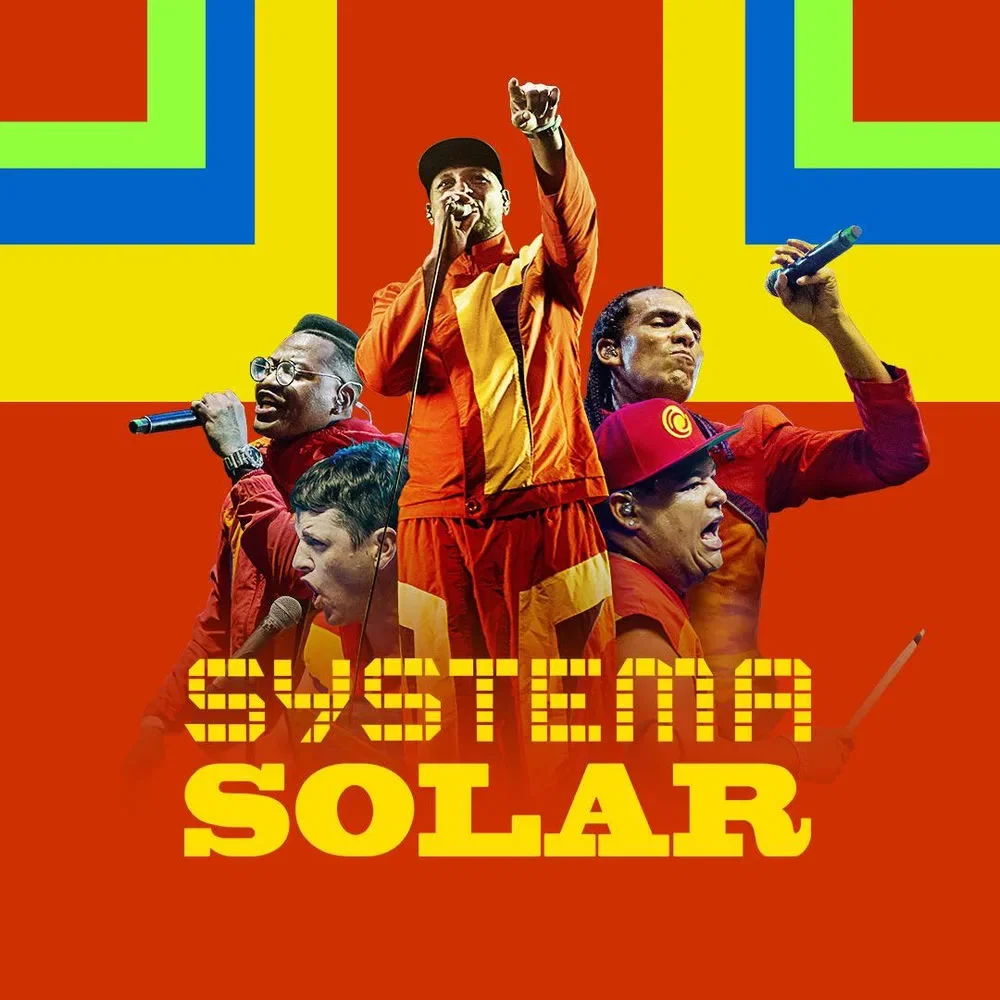
The festival has never treated that variety as a reason to freeze tradition. Some of its most important programming has come from musicians willing to disrupt inherited forms. La Mojarra Eléctrica, Curupira, Frente Cumbiero, Systema Solar, Mitú and numerous younger projects have brought jazz, rock, improvisation, electronic production and urban aesthetics into dialogue with regional music. The result complicates easy ideas about authenticity. Cumbia can appear in a traditional ensemble and later be rebuilt through synthesizers; marimba can carry a currulao or enter a contemporary production; rural melodic forms can sit beside rap. Colombia al Parque is strongest when these versions do not compete to prove which is more legitimate, but reveal that living traditions survive by being used.
International programming, introduced more visibly from 2008 onward, extended the conversation beyond national borders. Susana Baca, Inti-Illimani, The Garifuna Collective, Los Mirlos, Lila Downs, Billo’s Caracas Boys, Pascuala Ilabaca, Bostich + Fussible and other visitors placed Colombian music within a broader Latin American and Caribbean continuum. This makes historical sense. Many of the rhythms heard at the festival are themselves products of movement across coasts, mountains, ports and diasporas. A Colombian festival devoted to roots would be incomplete if it pretended those roots stopped at the border. Instead, audiences hear connections between Pacific traditions, Andean song, Caribbean dance music and contemporary experiments occurring elsewhere in the region.
The programme around the stage matters as well. Workshops and discussions bring together musicians, researchers and cultural workers; dance translates musical memory into physical form; entrepreneurship zones support Bogotá creative projects; food makes regional identity edible; environmental and literary activities create other routes through the park. Education is present without requiring the atmosphere of a classroom. A child can hear a marimba for the first time, watch bullerengue dancing and later take part in a drum circle without being told that the afternoon is a lesson. Knowledge is transmitted because it has been placed inside celebration rather than separated from it.
The 2026 edition brought that philosophy into focus through the theme Cantoras: Arrullo, fiesta y siembra. Women were not simply well represented on the lineup; they became the framework through which memory, care and transformation were discussed. Martina Camargo brought tambora and oral tradition; Belkis Concepción turned Saturday night into a merengue celebration; Flor de Cerezo and Reburú offered different relationships with gaitas and Pacific sounds; Marta Gómez closed Sunday with a more intimate form of Latin American song. Between them were Orquesta de Lucho Bermúdez, Bambarabanda, Bejuco, Quilapayún and the electronic cumbia of Amantes del Futuro. Around 25,000 people attended the two days.
More than twenty years after its first edition, Colombia al Parque remains difficult to reduce to three genres because its true subject is not a genre at all. It is the idea of a country heard through the people who continually remake its music. Bogotá is the appropriate place for that proposition precisely because it is a migrant metropolis where regional identities already overlap every day. When families spread across the grass of Parque de los Novios while gaitas, marimbas, accordions, voices and synthesizers take turns on the same stage, Colombia stops functioning as an abstract national category. For a few hours, it becomes something people can hear, dance to and recognise in one another.
Genres
COUNTRY
FOLK
LATIN
Timeline
One artist per year — highest ranked in our archive
Those who appear most across this franchise's editions.
 #1
Ecuador
1 editions · 2023
 #2
Colombia
1 editions · 2023
 #3
Colombia
1 editions · 2023
If you like Colombia al Parque, these have a similar lineup.